Tuesday, August 31, 2021

Jude Vachon: Progressive Librarian (1964-2021)

Jude Vachon reading at Nine Stories Bookstore in Pittsburgh, 2018.

I don’t know how to tell you that Jude Vachon is gone. Jude was often wildly happy and vibrant, often engaged in a new project or an ongoing effort, sometimes deeply pissed off or giggling, but she was always very much present. When you were around Jude, you never didn’t know that Jude was there. I wanted to write something to honor her “memory,” though it seems unbelievable and almost blasphemous to call her a “memory.” But I also wanted to write something to say that I’m thinking of you if you are thinking of Jude today. I know that so many of her friends, coworkers, and people in her communities are hurting over her loss. Or still just in shock. I know because even in this strange and empty pandemic landscape, it’s hard to go anywhere in Pittsburgh without running into someone who loved Jude and what she encouraged in us. 


Progressive Library Skillshare, Pittsburgh, 2007. L to R: Justin Hargrave, [___?], Jude Vachon, Alina del Pino, Kelly Rotmund, Vani Natarajan, Jenna Freedman, and Sandy Berman. Front row, Veronica Liu and Tricia Burmeister. Photo courtesy Justin Hargrave.

I first “met” Jude from afar when I attended the Progressive Library Skillshare event in the earliest days of my library school education. This was September 2007. A few Pittsburghers (including Jude) who could see the social justice potential of the library, created a weekend event and invited radical library giants Sanford “Sandy” Berman & Jenna Freedman to speak. This event, these speakers, the democratic nature of the event structure, got me deeply excited about being a librarian. The weekend opened my eyes to the compassion involved in making information accessible, made me think about the politics of findability and information distribution, touched on the joys of socially-conscious cataloging, and made me aware of the role librarians can play in both reconnecting marginalized citizens to their communities, and contextualizing marginalized reading materials and information sources. (That weekend was a direct inspiration for this blog, which launched a few weeks later.)


Throughout the weekend, Jude was one of the handful of people running around The Union Project in an event tee shirt, making the events happen. I say I “met” her that weekend because her face was so unforgettable. It was a face I would come to recognize over and over--that Jude face. Anyone who has worked with her on a library program or a zine fair or a craft fair or a Radical Reference action or an affordable healthcare mission will know what I’m talking about. Concentrated, animated, focused, engaged. Firmly in the trenches, firmly in her element, and never far from joy. Utterly present, utterly involved in the task at hand. And the task at hand is almost always connecting with people--through information or creativity, or a creative method of distributing information. 


Jude’s face was also, at the risk of sounding trite, radiant. When she smiled there was a sudden electricity in the room, but even when she didn’t there was an effortless beauty emanating from her features. With her close cropped hair and her black Irish coloring, Jude’s face had a touch of 1940s glamour without trying. But of course once you knew Jude any amount, it always seemed like it was her radical heart that was radiating through her face. 


I always associated Jude with the ideals of the Progressive Library Skillshare event, and I wasn’t wrong. Jude never seemed to be far from her apparent life mission to leverage her education and her energy to help others access information that could improve their lives. One of her most widely known projects was a resource she created called Be Well! Pittsburgh. It started out as a zine and later became a website, offering detailed lists of Pittsburgh-area healthcare practitioners and clinics available to the poor, the uninsured, and the underinsured. This is the kind of information source that we are tempted to take for granted in the wealthy democracy of America, in a city lousy with public libraries, in an era of online everything at our fingertips. But it is the kind of handy resource that in fact starts with a hardworking, big hearted, skilled information professional like Jude Vachon--Jude who recognized the absence of such a resource, knew the context of that absence, and then filled that absence. 


Twice in recent years I was organizing a reading and invited Jude to be one of the featured readers. I loved Jude’s writing and storytelling, I loved talking to her before and after the reading, and I was also jazzed by her commitment to zines. To me zines meant Jude was interested in the stories she was telling as well as the act of reaching readers through “the people’s printing press” (what I call the xerox machine). To me this meant she was trying to tell her stories to people outside of the literary ghetto. When I named one of the readings “Stories and Other Ephemera” (The Big Idea, 2015), I wanted the event to bridge the gap between the zine scene and the literary scene. Jude embodied that bridge in my mind, because she was a talented writer who aimed for a democratic, pass-it-around distribution rather than a climb up the literary ladder. 


Stories and Other Ephemera reading at Pittsburgh's Big Idea Bookstore, 2015. L to R: Jude Vachon, Karen Lillis, Mike Faloon, Michael T. Fournier, Becky Tuch.

I knew her for a long time as Jude who worked reference on the first floor of the main public library. As Jude who had followed in Jenna Freedman’s footsteps and started a zine collection at the public library. As Jude who hosted outside-the-box events at the public library. I remember admiring her librarian life and hoping I would work there alongside her one day. I remember that one day she didn’t work there anymore. I remember worrying about her a little as she entered the gig economy and took on translation jobs for a living. I remember the colorful serenity of her spacious wood-floor apartment in Wilkinsburg, with piles of folded fabrics on a huge shelf in the living room. I remember her excitement at buying a house near the Allegheny River in the flats of Lawrenceville. I remember her sense of adventure as she traded it in for a “tiny house” she parked in Garfield.


If I tell you anything about Jude, I am bound to stress her conspicuous desire to help create a more equitable society. But I would like to add that I have known many advocates and activists, and Jude was not some of the ones you are thinking about. No person is a cliche, but many people operate as such. Jude was instead a wide human being, both consistently herself and surprising me with the reserves of energy and optimism she had for new conversations, new ideas, new projects. Jude was not the kind of activist who is angry 24/7. Nor was she the kind of activist who seems run ragged by giving away all her good will to others. The Jude I knew had a sense of self care, a sense of historical context, a sense of what needed to be done next, a sense of pleasing herself, a sense of wanting to make beauty, a sense of fun, and a sense of mischief. It feels accurate to say that every occasion on which I ran into Jude, she offered a mention of an injustice that outraged her, a story about something creative that excited her, and an infectious laugh.


It will be a while wrapping my mind around Jude Vachon’s absence, because my outstanding memory is of her earthy, expressive, provocative, fearless, vocal, stand-her-ground presence.

Friday, October 16, 2020

Pittsburgh Current Takes the Wideman Challenge with a Triple Feature

Pittsburgh's newest alternative weekly, Pittsburgh Current, has taken up the Wideman Challenge with three pieces on John Edgar Wideman in one issue:

First, Pittsburgh Current staff writer and editor Jody DiPerna writes a bit about Wideman's legacy in books and in Pittsburgh, and interviews Homewood librarian Denise Graham: 

[Graham on Writing to Save a Life]: “'The depth of the research he did to find out about this man that nobody knows about....Everybody knows about [Emmett Till's] mom taking that stand to make sure the casket was open. But nobody knows about the sad and almost tragic life his dad had. I like the depth of his research. He turned this forgotten person into a person.'"

PEN Prison Writing Award winner Eric Boyd reviews Brothers and Keepers, including the new afterword by Robert Wideman:


"....throughout Brothers and Keepers, Wideman examines the power of language and the ways it is lacking: the origins of the word jail, the impossibility of making prisoners invisible from society, and the unstoppable force of time itself...."


And Allegheny County Jail writing teacher Michael Bennett shares an essay on his students' reaction to reading The Homewood Books and getting a visit from Wideman himself:

"In fiction, Tommy is never caught or sent to prison. He finds safe haven behind the house of the old woman at the top of Brushton Hill who offers him food in exchange for yard work and his company. The students could easily identify — they all knew what it was like to run from police, scared for their lives."

*****

Keep the conversation going! Take the Wideman Challenge as a reader, reviewer, editor, bookseller, librarian, or book club.  Read John Edgar Wideman, and stay tuned for more reviews.

Wednesday, October 7, 2020

Week Two of The Wideman Challenge: Pub Day, Robby Wideman, and Pittsburgh Book Review on God's Gym

Yesterday was publication day for TWO books by John Edgar Wideman that are being reissued by Scribner.  Brothers and Keepers, a memoir (1984), and Philadelphia Fire, a novel (1990). A Wideman Challenge review of Brothers and Keepers (the first one I assigned!) is set to come out next week, and there may be a review for Philadelphia Fire coming in the next month. With the Wideman Challenge, I am aiming to find at least one book reviewer for each book written by writer and Pittsburgh native John Edgar Wideman.

Image

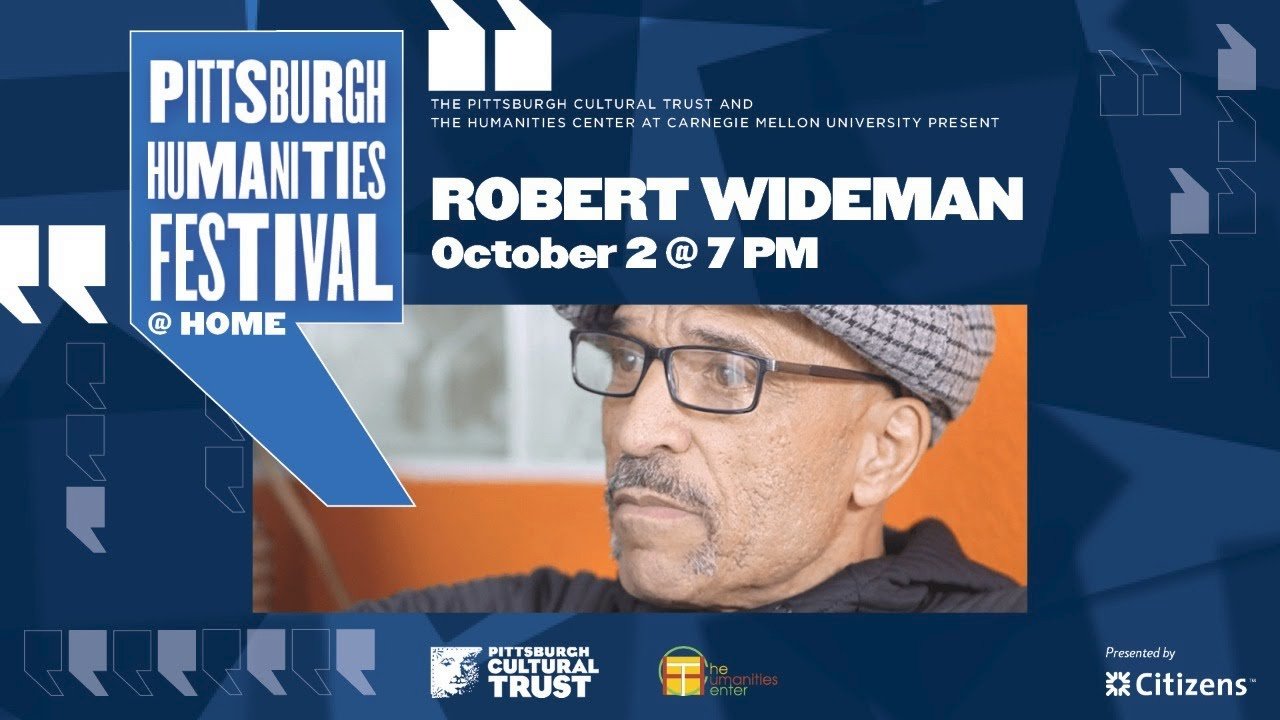
The new edition of Brothers and Keepers features an afterword by Robert Wideman. Robert ("Robby" in the book) is John's brother and his incarceration is the subject of the memoir. Robert was sentenced to life in prison without parole for his involvement in a botched robbery that resulted in a man's death. But after at least one major development in the case and 44 years in prison, Pennsylvania Governor Tom Wolf commuted Robert's sentence in 2019.  Robert Wideman gave a virtual talk last Friday at the Pittsburgh Humanities Festival about his experience: “Life Sentences: The Amazing Journey of Walking Out of an American Prison.” Watch the talk here on Youtube.

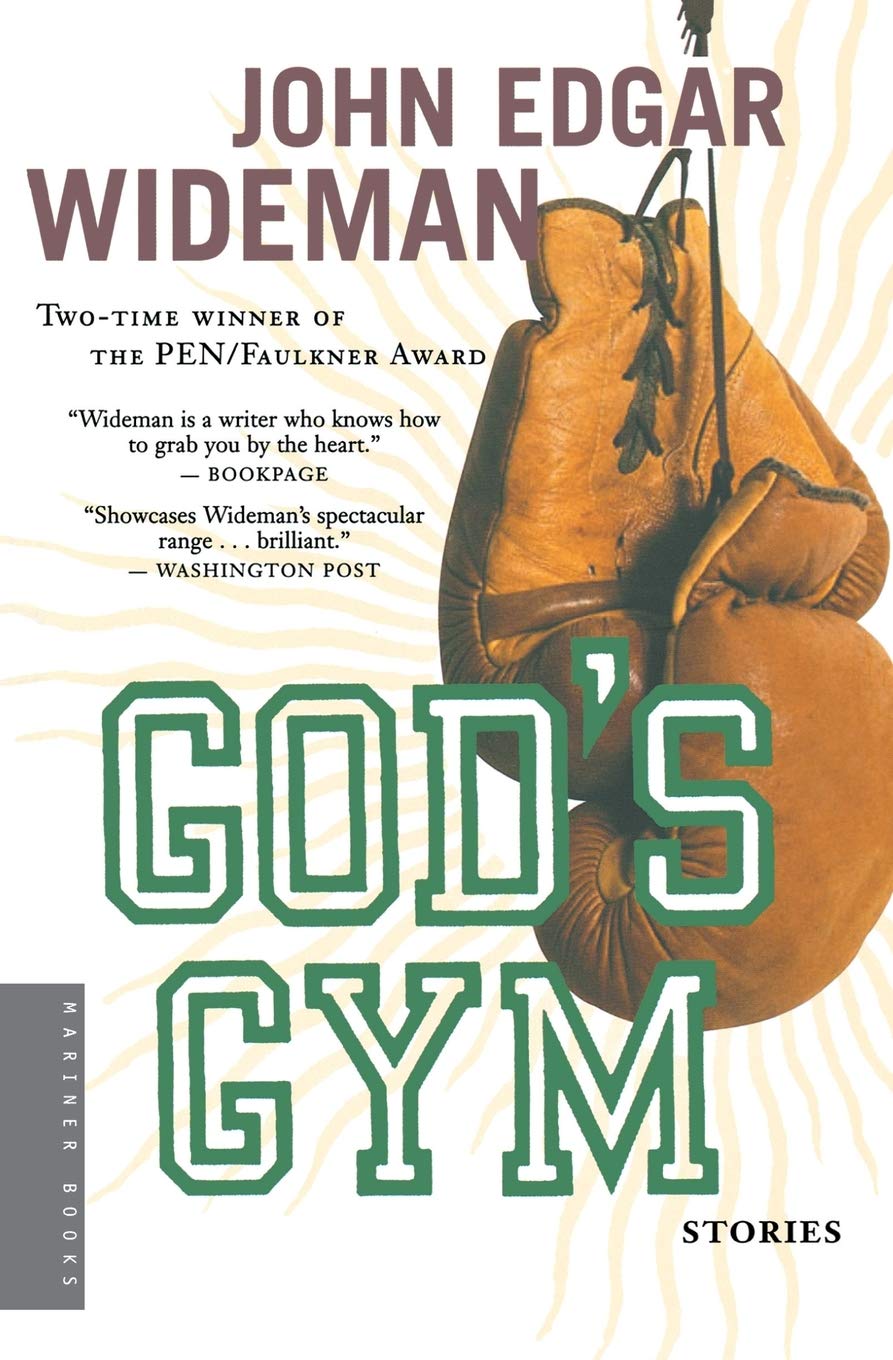
God's Gym: Stories: Wideman, John Edgar: 0046442711999: Amazon.com: Books 

Today at the Pittsburgh Book Review, poet and editor Kristofer Collins reviews God's Gym, John Edgar Wideman's book of short stories from 2005. He writes, "All families struggle with the stories that they don't want told. The secrets and fears, the shames and sadnesses that once said, once given flight by simple words, can soar back at us with cold talons, unsheathed and razor sharp, cutting the flesh and rending the heart. These are the hidden stories never to be uttered aloud. A writer in the family just plays havoc with such things." Please enjoy Kris' essay and then pick up a Wideman book to Read, Reflect, and Review!

Monday, September 28, 2020

The Wideman Challenge Starts Today: Guest Reviewer Becky Tuch on FEVER by John Edgar Wideman

Today I'm launching the Wideman Challenge, in which I seek out one book reviewer for every book that John Edgar Wideman has written, and challenge readers everywhere to pick up a Wideman book. Have you heard of him? Wideman has been writing inventively, intensively, incisively, introspectively about Black America since 1967. In my experience as a bookseller, far too many people have not heard of him or his roster of over twenty titles of fiction and memoir, and I'm hoping to change that.

I'm thrilled to introduce Becky Tuch as the kick-off reviewer of the Wideman Challenge. I met Becky soon after she moved to Pittsburgh (where Wideman grew up and the site of many of his best books) several years ago. I loved hearing from her evocative novel in progress at a Big Idea reading, hearing the curiosity in her voice when she talks about writing, and hearing her enthusiasm for teaching creative writing. She's been teaching with Boston's Grub Street for many years and since landing in Pittsburgh now also teaches with Creative Nonfiction. Please enjoy her review of Wideman's stories:

*******

Fever: Twelve Stories, John Edgar Wideman. New York: Henry Holt, 1989. Short fiction. 161 pages.

What is the role of point-of-view in fiction? Traditionally, the narrator occupies a consciousness, or several, through which the story’s universe is interpreted. The reader may experience the interpretive lens of one character or many, yet one maxim remains steadfast: At all times the reader must be grounded. A story will not succeed when a reader is not firmly rooted within a guiding consciousness. We need, above all things, to know who is perceiving and when.

Here, then, is John Edgar Wideman’s Fever (1989), a short story collection that tosses aside traditional notions of point-of-view, offering readers something disruptive, challenging, and wonderfully different. In these stories, narrative perspectives shift abruptly; dialect changes mid-page. Stories within stories unfold, occasionally containing their own backstories, with new characters emerging to take over the narrative. Expectations are overturned; norms are shattered. If Wideman asks one thing of his readers, it is that you pay attention. In life, as in Fever, you cannot know what is coming around the bend. 

 In “Doc’s Story,” the collection’s inaugural story, we encounter an unnamed narrator, grieving the departure of his lover who “left him in May, when the shadows and green of the park had started to deepen.” Consoling himself, he plays pick-up basketball, talks to the other players, “cools out on reefer…[and] collects the stories they tell.” One of these player’s stories is about Doc, an older man who began going blind. In learning about Doc, we are shifted suddenly into another narratorial voice: “But one Sunday the shit got stone serious. Sunday I’m telling youall about, the action was real nice. If you wasn’t ready, get back cause the brothers was cooking.”

 “Doc’s Story” is perhaps the most autobiographical in the bunch. In Brothers and Keepers, Wideman’s memoir published four years before Fever, the author follows the life trajectory of his brother, who is in prison. Wideman writes, “However numerous and comforting the similarities, we were different. The world had seized on the difference, allowed me room to thrive, while he’d been forced into a cage. Why did it work out that way? What was the nature of the difference? Why did it haunt me?” In “Doc’s Story,” where a narrator shifts among different perspectives, merging the language of the street seamlessly with formal speech, Wideman appears to have transformed all that haunts him into a buoyant and refreshing mode of story-telling. 

In “The Statue of Liberty” Wideman’s shift in perspective takes the reader deep into delightful and wholly unexpected places. Here we begin with a narrator jogging in the countryside. The narrator describes the view and the people he passes along his route. One might expect a quaint story about jogging through rural landscape. Yet we learn, “Another way joggin pleasures me is how it lets me turn myself into another person in another place.” Moments later, the narrator says, “When the huge black man springs from the shadows I let him grapple me to the ground.” It takes a moment to understand that we have shifted from the point-of-view of the jogger to that of one of the farmers whose lives he is imagining himself into. What follows is a stunning erotic scene between the farmer and two joggers. The scene is sexually explicit, racially transgressive, packed with violent metaphors-- “The petals of my vagina are two knuckles spreading a fist stuck in your face,”--and fabulously engrossing. 

If it takes the reader a moment to realize who now holds the reins of the story, that is a small price to pay for the gift of Wideman’s larger philosophical and political aims. Indeed, Wideman has made clear his intention to use abrupt and at times disorienting point-of-view shifts toward not only aesthetic but much-needed political ends. “Think of that blood leaving you and running up in somebody else’s arms, down into somebody’s fingers black or brown or ivory just like yours,” he writes in “When It’s Time to Go.” In “Fever:” “Each solitary heart contains all the world’s hearts...Fever descends when the waters that connect us are clogged with filth.” In “The Statue of Liberty:” “We must move past certain kinds of resistance, habits that are nothing more than habits. Get past or be locked like stupid braying animals in a closet forever.” 

Perhaps unsurprisingly, blindness is also a theme woven throughout the collection. In “When It’s Time to Go,” we encounter a young boy losing his eyesight. The story begins from the perspective of a man relating the tale to his brother, then shifts to the boy, now grown-- “Yeah, they might could have saved my sight. Ain’t never gon forgive them that.”-- and finally to the perspective of a man in a bar talking about the blind musician-- “So that’s about all of it, my friends. Sambo could sure nuff play.” We encounter the blind musician again in “Concert” and “Presents,” the latter the most traditionally structured story in the collection. 

In “Surfiction,” the collection’s most experimental story, an academic is taking notes on a writer for an upcoming presentation. We follow the narrator’s thoughts on his own remarks, as well as his own deconstructive tendencies toward his own notes. “We are put into the passive posture of readers or listeners (consumers) by the narrative unraveling of a reality which, because it is unfolding in time, slowly begins to take up our time…” Some of this is charmingly witty, as when he observes, “Without authors whose last names begin with B, surfiction might not exist...Which list further discloses a startling coincidence or perhaps the making of a scandal--one man working on both sides of the Atlantic as writer and critic explaining and praising his fiction as he creates it: Barth Barthes Barthelme.” 

Funnily enough, it is Wideman who is explaining his fiction as he creates it. In the final and titular story, “Fever,” Wideman rotates through multiple perspectives to explore the ravages of yellow fever on a town. A contemporary reader will find many devastating similarities here with the coronavirus pandemic and those who have been on the front lines of caretaking. Throughout the story, Allen, a Black doctor, relates “How the knife was plunged into our hearts, then cruelly twisted. We were proclaimed carriers of the fever and treated as pariahs, but when it became expedient to command our services to nurse the sick and bury the dead, the previous allegations were no longer mentioned...We were ordered to save the city.” Or, put another way by the modern narrator who arrives at the story's end: “Yeah, I nurse these old funky motherfuckers, all right.” 

It is in the conclusion of this story that we arrive at the summation of Wideman’s vision. It is here that we encounter the dissection of a body, the weight of a kidney, a liver, a spleen, a brain. Yet we are also lifted aloft into the metaphysical realm, the attempt to transcend one consciousness and seamlessly enter another at the core of all the stories in this collection. “Right next to the heart,” Wideman describes, “the miniature hand of a child, frozen in a grasping gesture, fingers like hard tongues of flame, still reaching or the marvel of the beating heart, fascinated still…” 

The stories here, though published over three decades ago, have a potent urgency in our current world, particularly for writers and readers in search of new modes of storytelling. The rules, both aesthetic and political, are made to be broken. Let’s finally see one another, this collection cries out, and shred the norms that confine us. 

Guest review by Becky Tuch
Writer, editor, teacher
Founder of The Review Review
Find Becky on Twitter: @BeckyLTuch
And on the web: https://www.beckytuch.com/

*****

Find Fever and John Edgar Wideman's books here.

Follow the Wideman Challenge from now until the end of 2020. Check back at this blog or follow me, Karen, at Twitter: @BookstoreMemoir

Wednesday, September 23, 2020

Coming Soon: A New Book Review Project

It's been a long time since I've posted here. I miss blogging, and I miss the slower-paced lifestyle that allowed me to maintain a blog. So in a bit of good news among the flaming shipwreck of 2020, I'll soon be bringing you some new content: Stay tuned and watch this space for new book reviews revolving around one particular author.

Wednesday, July 15, 2015

Interview with Rami Shamir


Today I'm posting Part One of my interview with Rami Shamir, in the last 29 hours of a Kickstarter campaign for his novel TRAIN TO POKIPSE. This explosive and heartbreaking novel not only deserves your support on its own merits, but also stands out for a few other things. POKIPSE was the last editorial project of the infamous publisher Barney Rosset (Grove Press and Evergreen Review). The novel has been the heart of an extended experiment in independent publishing and marketing by Rami and his co-conspirator Adam Void, who designed the stunning cover. Rami and Adam published the book (as Underground Editions) in 2012 and engaged in guerilla marketing techniques, blanketing cities in wheatpasted ads and a sticker campaign. Rami went on a coast to coast reading tour in 2013 and in the process created a network of independent bookstores to support the book's distribution. You can find the Google map he created to share with other indie authors and publishers here. Rami has rejected Amazon completely in marketing TRAIN TO POKIPSE. You should also know that Rami was one of the early and long time Occupiers at Zuccotti Park.

Karen: I understand that the first printing of TRAIN TO POKIPSE is sold out. Why are you doing a second edition of POKIPSE? What's different about this edition?

Rami: Yes, the first edition of TRAIN TO POKIPSE has been sold out for about six months now. I’m doing a second edition, because the demand to read the book remains high and because as both the book’s author and publisher it’s my responsibility to keep what is a very important work alive and well in the world. This second edition will have a new introduction from Micah White, the co-creator of Occupy Wall Street and the former Senior Editor at Adbusters magazine; it will be printed in a run of 1984 books—Why? Because the first edition was a run of 911 books, and as Adam Void, POKIPSE’s cover artist and my longtime artistic collaborator pointed out, “What follows 911? 1984.”; lastly, there will be an annotated e-book version, which depending on whether or not we reach our stretch goal of $19,000, will either be a simple digital annotation (if we don’t) or (if we do) something far more interesting: involving film footage of New York City nightlife from circa 2006 that I took before setting off to write POKIPSE, as well as documentary visuals, music, and multi-media discussions.

Karen: Barney Rosset, your friend and POKIPSE’s editor, was a big inspiration to you. And to so many of us. He was an undeniable force in creating a place for counter culture America, in cultivating an audience for--what do we call his authors?--the avant garde, for some of the most politically and culturally relevant literature of his time. His boldness and his marketing genius matched his passion for art and revolution, and he seemed to be able to transport “art” from obscure corners and deliver it to the street. He made household names out of writers who might today be published on University presses. There are a lot of different questions here. First, can you talk about how you see literature today? Do you see any publishers taking these kinds of risks? Are these risks there to take? Is there an equivalent literature today, reaching a broad cross section of readers? Is there an equivalent audience? Who are the living writers you admire who are carving out new cultural or literary territory?

Rami: Well, Barney Rosset was less of an influence on my life, than he was something akin to a fact; as much a fact as the rotation of Io or Europa around Jupiter are facts. When Barney allowed you into his life, you became part of a planetary system, the moon of a gas giant. As such, I enjoyed a privileged education and vantage point to understand American literature across a long span of time. I’ve thought about this a lot, and I’m beginning to believe that the first thing to go isn’t going to be the water or the air; the first thing we’re going to lose, in fact that we’re already losing, is our literature. It really takes a village to produce a literary work and book publishers in America, at least the ones that I’ve encountered, can’t produce that sort of village like Barney could: they won’t take the risks, they don’t have the financing, and they don’t have the will. That’s why I’m doing the Kickstarter to publish the second edition of TRAIN TO POKIPSE. As an author, I don’t have any faith left in American publishers; but I have a lot of faith in people: the world’s readers, not the world’s publishers, are who can and who will save literature.

That’s not to say that there are no good publishers in America today; not at all. Semiotext(e) has just brought out To Our Friends, the sequel to The Invisible Committee's 2007 The Coming Insurrection—which along with Crimethinc.’s Work—could be cited as one of the paramount texts that infiltrated youth culture in America and helped incite the 2011 onset of Occupy Wall Street.

But the fact remains that my personal experience with book publishers in America has not been that great. I was around a lot of publishers who feigned to have pretensions of being the spiritual descendants of Barney Rosset. Barney took TRAIN TO POKIPSE to two indie presses, one in New York and one in the Midwest. I mean these were two important indie publishers of the day that claimed to be students and apostles of the great Barney Rosset. You'd have thought that they would have jumped on the opportunity; instead, they demanded ridiculous changes or dragged their feet. Eventually they both turned down the last book that their hero would edit and champion. I think there’s a lot about American book publishing in that parable. Nonetheless, I do believe in what my good friend Jack Doroshow has always told me; I do believe that minds are meant to change, and I’m more than open to my mind changing on this matter.

Karen: Can you talk about the direct influence Barney’s publishing legacy, broad or specific, had on your outreach plan for POKIPSE? I know that your plans for POKIPSE evolved over time, and I also know there was a lot of DIY ethos in the air by the time you released your novel in 2012. So I’m curious what interactions with Barney (or Astrid) sparked different aspects of your handling POKIPSE?

Rami: Well, as I’ve mentioned before I’ve really had three great publishing influences in my life; David Nudo, who’s now the Book Sales Manager at the New York Times, Barney Rosset, and Adam Void, who was the co-publisher for POKIPSE’s first edition. Along with his partner, Chelsea Ragan—who’s been my main collaborator on POKIPSE’s Kickstarter campaign— Adam bears a lot of the credit for TRAIN TO POKIPSE’s continued existence in the world. Adam is rightly credited as being a seminal figure in the zine chapter of American publishing history.

POKIPSE was written during the advent of that North Brooklyn’s Print Renaissance. You know, Joe Ahearn’s Showpaper had a really big effect on a lot of people including me and Adam. Gabe Fowler of Desert Island started Smoke Signals after doing a few issues of Showpaper, and POKIPSE’s posters eventually modeled themselves after Showpaper as well. In fact, I think that Linco, the printer over in Queens that so many of us use, owes a lot of its business to the great influence that Joe Ahearn and Showpaper have exerted on so many people in their twenties and thirties.

Of course, this is all an issue of the counterculture. There are many very intelligent and highly attuned people in the world who are neither aware of this information nor welcome it into their worldview when they become aware of it. That is how counter-culture works. The culture just can’t accept the dark matter of it all. Barney, of course was not one of those people. I brought copies of Showpaper and Smoke Signals to Barney; and when Occupy Wall Street hit, I brought Barney zines from a New World and Crimethinc. as well as issues of the Occupied Wall Street Journal, which very much impressed him. Now, Barney and I didn’t agree with each other completely all the time. Limiting POKIPSE’s first edition to 911 copies (a decision which of course was an off-shoot of the text, and as such, in this effort to bring forth a perfect first edition was non-negotiable) led Barney to claim that I was more difficult than Beckett. Of course, I took that as a compliment. “It wasn’t meant as compliment,” Barney had quickly replied. He was always so fast on his feet. Nonetheless, we never argued; we were involved in a discourse, a debate, and the mutual purpose shared by both parties was the most beneficial outcome for TRAIN TO POKIPSE.

Karen: I think that 9/11 affected us in as-yet-untold ways. Have you read any novelists (or other writers) writing about the fallout of 9/11, how it affected New Yorker’s lives?

Rami: Yeah, I’ve read a few. The ones that are most exciting are of course the ones that don’t scream so much about their being about 9/11. Gary Indiana’s Do Everything in the Dark is exemplary in that respect. Written after 9/11, the events of the book take place in the summer of 2001 and extend to just a few days before the events of September 11, 2001. I think Gary once told me the exact date, but I’m sorry I just can’t remember at the moment… something like September 09, 2001 is the last day in the book.

I really understood 9/11 much more clearly after reading this book, because I saw how frightening America had become in the years before the attacks. So the response, which of course in many ways is examined in TRAIN TO POKIPSE, became more comprehensible to me. Gary’s books are really part of our great national treasure of literature, and it’s a crime that they’ve been allowed to go out of print for so many years. Fortunately, a few publishers have been slowly rectifying that. Among them are Christopher Stoddard’s Itna Press, which has just released a new edition of Do Everything in the Dark.

Photo by Lydia White
Karen: It’s getting tough to pay the rent in America. Almost everyone I know in the “Post” Recession is either underemployed or overworked. Either of these can be challenging for artists, who need to both pay the bills and save some time for the often-unpaid second job of writing or creating. Maybe get a little health coverage in there. What’s your strategy for balancing out these needs? What kind of strategies do you see working among your creative acquaintances? And do you have health care coverage?

Rami: I mean this is a great question; one that I’m always discussing with people. You know, I’ve been a cliche of every writer in many ways. I travel the country, I sleep around, people house me, one day I’m in this city, the next day I’m in another city. I have different personas which sometimes even take on different names (few people know about this; it’s in tune with George Orwell’s “slumming” approach and has been coming out ever since Occupy, in large part as an investigation for the next book). I’m almost always broke, but I have amazing friends and people around me. Without them I couldn’t be who I’ve been, and the whole mission, this whole journey would never have happened. It’s fun and all, but it is also a very valid criticism that the unwavering conviction and integrity that I’ve had as a writer has caused havoc on my personal life. I totally want my own room, where I can find my stuff, with my own bed. I very much want to date people, which hasn’t been possible with this type of existence. While it’s exciting, it’s only because I’ve decided to view it that way. Viewed another way, I guess it’s indisputable that I’ve “suffered for my art.” You know, you do what you can do, and then you change it when you have to. I did this Kickstarter because I couldn’t do it like that anymore. I needed help from the public. I went to the public, and the public has responded beautifully. With less than 42 hours left in this campaign, 142 backers have brought us to 99% of our goal, and what can be more beautiful than that?

Editor’s note: The campaign reached 100% of its goal by the time I was publishing this interview on Blogger, but Rami has a stretch goal of $19,000. Please check out the Kickstarter funding campaign for this terrific novel and fiercely independent literary spirit.

*****

Stay tuned for Part Two of this interview, which will be published next week.

Read my previous post about Rami Shamir here:
Must-Read Indie Publishing Interview: Rami Shamir


Sunday, September 21, 2014

Writer on Writer: Sarah Shotland Interviews Colleen McKee

Last week, Colleen McKee interviewed Sarah Shotland about her new novel, Junkette. This week Sarah interviews Colleen about her 2013 book, Nine Kinds of Wrong (JK Publishing, St. Louis). Colleen's book defies publishing conventions by putting fiction, poetry, and memoir all between the same covers. The unifying factor instead becomes the author herself, and her restless journey between cities, lovers, friends.

*****

Sarah Shotland: Public transportation pops up again and again throughout Nine Kinds of Wrong. As someone who loves to write while riding public transportation, I'm curious if you also like to write while in transit? And what about public transportation inspires your work?

Colleen McKee: I’m blind in one eye. I have never driven a car in my life. That’s good because I spend every possible moment of my time that I am on public transit writing. Public transportation makes you get up close and personal with people you wouldn’t choose to know. In St. Louis, where I’m from, only the poor, disabled, and those with DUI’s ride the bus. Some of those buses are rip-roaring insane: people trying to sell you stolen socks, expired transfers, ripped-off movies, marijuana, Jesus Is Lord, candy bars…trying to get dates, trying to get you to be their 'ho…Lord have mercy, you name it. And all the while it stinks of piss. (I have a poem about the 70 Grand that appeared in my chapbook A Partial List of Things I Have Done for Money.)

Here in the Bay Area, almost everyone rides the BART train (Bay Area Rapid Transit). It’s this fascinating cross-section of our society, which is made up of thousands of different international, sexual, political, and artistic subcultures (plus yuppies). Add to this the very wide availability of potent drugs. And the fact that there’s at least one festival happening every day, so the chances are high you’re going to see someone covered in feathers, glitter, and not a lot else. Any writer should be able to get at least one poem off the BART every day—as long as her eyes aren’t glued to her phone. My bag is always full of postcards with drafts of poems on it. Maybe one day I’ll become the Premier Poet Laureate of BART.

Sarah: Can you talk a little bit about why you decided to include fiction, memoir and poetry in your collection?

Colleen: After Nine Kinds of Wrong came out, a successful writer told me, it was a terrible mistake that I had put these three genres together, that it made the book unmarketable. He said bookstores wouldn’t know how to promote it. But other writers say to me, “Wow, you can do that? I didn’t know you could get away with that. You’re lucky.” Readers who aren’t writers don’t comment on this at all.

I’ve always wanted my books to be fiction, poetry, and memoir mixed. My two chapbooks, My Hot Little Tomato and A Partial List of Things I Have Done for Money, were also a combination of poetry and prose. And within those books and chapbooks are a few stories that are hybrid forms, such as the poem “A Partial List of Things I Have Done for Money,” in which some of the lines are almost as long as paragraphs. It’s important to me to be able to mix these forms within a collection because I have some poems that I think of as sisters to certain works of memoir or fiction. For example, “What We Had Instead of History,” a poem, has much the same tone and topic as “How to Steal a Book.” They’re both sad, bratty pieces about being a juvenile delinquent. “How to Steal a Book” is a hybrid—it’s memoir with one stanza of a poem in the middle.

Sarah: How do you decide what material to present in a specific genre?

Colleen: It was more about atmosphere and intuition than genre. I knew it would be a grimy, sexy urban book, and that I would put in some more writing about Miko that hadn’t made it into my last chapbook, A Partial List of Things I Have Done for Money. (Miko was a close friend and old flame who killed himself in 2008.)

Sarah: What are the major differences you see between forms?

Colleen: For me there are no meaningful distinctions between these forms except, memoir should be true! In my work, line breaks are just a rhythmic device, like punctuation or a paragraph break.

Sarah: In "The 59 Cent Pad of Paper" you write (of a man in a mental institution): "What did he need from the paper? What could the paper give that man, who couldn't eat oatmeal without supervision? Each drug store pad of paper was a bird with sixty wings, all flapping at once. With each mark, he drew the wings closer to him, if only for a few scrawling seconds." I'm curious. What do you need from the paper? What does the paper give you?

Colleen: It is possibly a terrible, terrible weakness that I cannot understand the contents of my mind without a piece of paper to sort it all out. But often I am left with not understanding but only a sorrowful wonder. Or maybe just a feeling that whatever lonely wayward thing was gnawing at my heart has gone to sleep, at least for a while.

My experience of my life is very fragmented. I moved around a lot. I’ve cared for drifters and fools and friends who died young. I want a way to remember.

Sarah: I'm interested in the fine art of "perhapsing" in memoir. In the essay, "The Devil's Fruit" you explore your parents meeting. This essay reminded me a lot of Sharon Olds' poetry, specifically the poem "I Go Back to May, 1946." How do you deal with writing about events that you couldn't witness and how they affect your life?

Colleen: I think the only two stories I’ve written that I called memoir or nonfiction that I didn’t witness were stories my mom told me, “The Devil’s Fruit” and “The 59 Cent Pad of Paper.” My mom is a wonderful storyteller. In “The Devil’s Fruit,” I thought I was being accurate, but then Mom told me, “I didn’t meet your dad at high school. I met him at the Hamburger Doodle.” Even when I wrote a memoir about something I had lived through, “The Unbreakable House,” I made a mistake. The essay was about this all-metal house I lived in when I was eighteen. I wrote that it was gray, and my sister corrected me: It was baby blue! I remembered it as gray because I was so depressed when I lived there. So our memory quite literally colors our perception. As Borges wrote, “My memory is porous and the rain gets in.”

Yet I respect veracity, even if we can only approach it. The distinction between memoir and fiction is important to me: the author has an obligation to accuracy if she’s going to call it memoir. Ethically, she really has to try her best to be truthful. The only time I fudge is with dialogue because that is hard to remember verbatim, and memoirs that are light on dialogue can get dull. But even when I make up dialogue, I try to be close to what that person probably said. Maybe I write that my mom said, “Well now, I reckon she got a wild hair up her ass,” and what she really said was, “Oh Lord, what’s she hootin and hollerin about now?” Either way, it’s the sort of thing my mom would say, and they mean about the same. James Baldwin said, “I want to be an honest man and a good writer.” I’ve considered getting this tattooed on my arm.

Sarah: Your book swings between encounters with intimate lovers and intimate strangers. Where do you see the connection between these two kinds of encounters?

Colleen: Well, lovers can be strange, and strangers can certainly be intimate! Especially here in the Bay Area, where strangers can just let it all hang out. This is a place where newspapers are full of serious debates about whether it is permissible to be nude in a public plaza if you haven’t brought your own towel to sit on. But even more shocking to me, as a Midwesterner, are the things people will just tell you at a party, on the street. This is an endlessly fascinating place, to the point where it’s a little overwhelming. I have been writing a lot of poems lately about people on the train, on the street, parades, how the individual (including me) relates to the crowd or to intense strangers. Maybe my next book will be called The Teeming Masses: Insects and People on the Street. (I like insects, too. I write a lot about them.) It’s important for a writer to be willing to look closely at anyone with a gaze that is compassionate and curious—but also you have to watch your back. That’s a mixed urban feeling which is uncomfortable in life, but that tension can be interesting in writing.

James Joyce said, “To be is to live in mystery, not in understanding.” Sometimes I have written about lovers in an attempt to understand them, but probably my better love poems are the ones that were written in appreciation of their mystery.

Sarah: If I had to pluck an overarching theme from your book, I would point to grieving and loss. In addition to the characters and people you explore in the book, your "Thanks" section includes four RIPs, and the dedication includes an RIP. In "Real as a Loaf of Rye" you write: "When did it stop feeling strange to be haunted?" How does your work commune with the ghosts in your life? Do you feel an obligation to write for those who cannot read your work?

Colleen: Yes, a lot of RIP’s! In the last six years, in addition to losing my grandparents, I lost five friends, four of whom died young. Miko died of suicide. Roger was just found dead in his office, and Ray had the date rape drug in his body. Roger was a junkie and Ray was gay. My suspicion is, therefore, the cops didn’t care about them.

Do I have a responsibility to write for the dead? I don’t know. I believe we should remember the dead. That’s human. As a writer, I never feel I’ve fully engaged with a story or a memory until I’ve written it down. Do I have a responsibility to remember the dead the way they’d want to be remembered? If I only wrote about Miko in a way that I was one hundred percent certain he’d appreciate, I wouldn’t have written a word. He went in and out of the closet; he was moody; he drank; he was beautiful and sweet and my lover and my friend. I hope when I’m dead, people will remember me as I really am. I don’t want anyone to say, “Colleen was an angel.” I’d rather they said, “Colleen could really be a bitch. She could work your last nerve. But we had a lot of fun, and she wrote some good stories.”

Sarah: One of the most intimate portions of the book involves Miko. As readers, we meet him in the memoir section of the book, but we continue to explore your relationship in the following section of poetry. What was the process of writing about him? How do you revise and edit work that is so personal?

Colleen: What was the process of writing about Miko after his death? It was pure torture. But it was something I had to do. I wasn’t capable of distracting myself from the pain, so I wrote through it, every day. I was on a poetry postcard list—I sent a postcard every day to one of these people on a list. I was sending these depressing poems mostly to strangers! I can’t say if it was therapeutic. It was necessary. After Miko died, most people wanted to talk to me about it, a lot--for about two weeks! Then no one wanted to talk about it. There was a sense I was “dwelling” on it if I talked about him (or just burst out crying in public). But I needed to talk, and also, I needed to talk to him.

I don’t know how I edited the work about him. I did something that felt too hard for me to do, and somehow I’m still here.

Monday, September 15, 2014

Writer on Writer: Colleen McKee Interviews Sarah Shotland

For the latest Writer on Writer interview, I paired Colleen McKee and her book Nine Kinds of Wrong (JK Publishing, 2013) with Sarah Shotland and her new novel Junkette (White Gorilla Press, 2014). Today Colleen interviews Sarah about Junkette. Set in hurricane-season New Orleans just before Hurricane Katrina, Sarah's poetic novel Junkette follows the day-to-day of post-college bartender Claire and her addict friends, whose lives seem already underwater. Come back next week when Sarah interviews Colleen about Nine Kinds of Wrong. Colleen's unique book bears witness, haunts dive bars, and remembers long-lost lovers or cities through a combination of fiction, poetry, and memoir.

***** 

Colleen McKee: Writing a novel seems like a big and scary thing to do, especially a first novel. What compelled you to write this novel? How did this process start for you?

Sarah Shotland: I started writing Junkette in 2006, about a year after Hurricane Katrina. I was living in China and I didn’t know Mandarin well at all and I didn’t have many people to speak English with. One of the beautiful things about living in a place where I didn’t speak the language was that all the peripheral noise of advertisements, passing conversations, radio, television, billboards was silenced. I had the chance to really quiet the outside world and listen to what was happening in my own mind. And because I spent a lot of time alone, and in silence, I had a great need to communicate. So I wrote. And because I had a lot of time, I was able to write about 400 pages in the span of about nine months.

Colleen: People associate drugs with excitement and glamour. Claire is a sexy girl with a sexy job in a sexy town. Yet Junkette depicts some aspects of her life as being unglamorous: some passages are gross, and she complains at one point that the routines of being a junky are boring, that she’s hooked on rituals that are sometimes comforting but sometimes just dreary. How do you think about the poles of glamour/anti-glamour in this book?

Sarah: I think most of Claire’s life is unglamorous. From the very first page of the book, she’s trying to get out of town. She gets lice, she’s broke, at one point she vomits because she smells so bad. Addiction is an incredibly boring experience. It’s endless repetition. The chaos that surrounds addiction can sometimes be seen as excitement or adventure, but the realities of supporting an addiction are tedious, exhausting and demoralizing. I hope I didn’t glamorize any of that. But, I do think there are times when I romanticize or glamorize New Orleans. I was really missing New Orleans when I was writing the book, and I think that means there are times when I glossed over some of the city’s less glamorous realities.

Colleen: I had problems with drinking and coke in my youth, and like Claire, my circle of friends were bound together by drugs; most of these friends were men. It would be an understatement to say their intentions toward me were not always honorable. The same could be said of some male characters in Junkette, yet Claire doesn’t seem much to relate to the other women in her world. Would you like to say anything about the dynamics of power and gender in this novel?

Sarah: Claire’s surrounded by men. Part of my choice there was a reaction to Junky, by William S. Burroughs (and to a lot of drug literature). In the traditional drug narrative, a man is at the center of the story. Women are martyred wives and mothers whose lives are destroyed by the men who define them, or they’re temptresses and whores who lead men into self-destruction. I wanted to play with that dynamic and flip it a bit. I wanted Claire to be the center of the book’s universe without making the men into the same kind of flat characters women are sometimes turned into. I think Claire’s relationships with men are complicated. She can see that she’s giving away a lot of power, and yet she keeps engaging in these relationships. But she also makes really self-serving decisions. So men’s intentions towards Claire aren’t all honorable, but neither are hers.

Colleen: I like the title. It reminds me of Smurfette, in a sick funny way—just as Smurfette’s the only female in a world of men, Claire is somewhat isolated from other women as the main players in her life are male junkies. Of course the title also reminds me of Burroughs’ Junky. Would you like to say anything about the title?

Sarah: I love Smurfette, and I love thinking of Claire as a tiny blue creature! And yes, I was definitely playing on Burroughs with my title.

Colleen: Do you think addiction fiction or addiction novels are their own kind of genre or tradition? This could be a lens through which people read Junkette. How do you feel about that?

Sarah: Definitely, and I hope people who love reading addiction novels will find Junkette.

Colleen: New Orleans is in itself a powerful character in this novel. Why did you choose to set Junkette there?

Sarah: When I started writing the book, I’d just moved away from New Orleans. I don’t feel like it could be set anywhere else. I was also really frustrated with New Orleans constantly being defined by Katrina, so I wanted to write a book that was set pre-Katrina. I tried to include as many places that no longer exist post-Katrina, and really paint a picture of a particular time in the city.

Colleen: Many novels about young women are coming of age stories, and they follow the traditional narrative arc of the Bildungsroman (literally, “a novel of building character”). The Bildungsroman shows how the female character’s childhood affects her young adulthood, and after going through some crisis or challenge--which is resolved by the end of the book-- the character has passed through the frightening transition from girl to woman and she’s clearly reached the other side. But this novel is very focused on Claire’s present life and her immediate future. How did you make the decision to not include much about Claire’s upbringing, or even her recent past?

Sarah: Addiction is really complicated, and I think too often it’s presented as being caused by something. A traumatic childhood, a destructive relationship, poverty. I wasn’t that interested in exploring why Claire is an addict. I was just interested in how she experienced it. Because the book is written in first-person, I didn’t think Claire would reflect that much on her own past; she’s caught in a very present-moment experience that means she can only really respond to the immediate problem she’s facing. I felt having her reflect a lot would be inauthentic and move into some dangerous territory of trying to explain away her choices.

Colleen: Junkette’s structure also resists tradition. You use often very short sections, definitively broken with typographical symbols. To me, this results in an intriguing sense of time being fragmented, highlighting this moment, then this moment. Do you see it this way? How did you decide on this form?

Sarah: As I was writing Junkette, I read Mary Robison’s books One D.O.A., One on the Way; Subtraction; and Why Did I Ever. Robison uses really short sections—she says she writes her novels on individual index cards. I really fell in love with her work. As soon as I read her, I knew Junkette had to be written in tiny sections.

Colleen: Claire makes a lot of lists. Some are poetic, some funny, and they are interspersed throughout the book in an intriguing way. Would you like to say anything about the list form and how you use it in Junkette?

Sarah: I think Claire’s really seeking order. Her addiction is a way of ordering her life. Her lists are a way of ordering her life. I secretly want to be a poet, but sadly, I am very bad at writing poetry. Lists are about as close as I come.

Colleen: What moved you to co-found Words without Walls (which, to use your words, “brings creative writing classes to jails and rehab centers in Pittsburgh, PA”)? Would you like to say anything about these students?

Sarah: I’m motivated by a lot of factors in my work with Words Without Walls. We have a huge problem with locking people up in this country. I’m not a lawyer or a politician or a social worker. I would be very bad at all those things. I’m a writer, so I try to do things with writing that address problems in our society. My students in jail and prison are just like all my other writing students: some are incredible writers, some aren’t that great, some don’t care at all about publication, some want an audience. But I think the act of writing is useful for everyone. Writing allows for reflection, reimagining, empathy, self-expression, spiritual engagement, fantasy, escape from and engagement with your self and your circumstances. The feedback I get from my students in Words Without Walls ranges from Writing changed my life and I’ll never be the same, to It was a relief to have a class every week that got me off the housing unit. I consider both and everything in between to be a success. What is somewhat different from my other students is an inability to deal with writerly bullshit. They aren’t at all interested in the professionalization of creative writing and the nonsense that comes with it. That means I have to bring in only the very best writing I can find, the most necessary pieces, and that brings me a lot of joy.

Colleen: You also work with students in the MFA program at Chatham University. This seems like it could be a very different experience than working with students in jails and rehab centers. How would you compare working with these two sets of students? In what ways are they similar, and in what ways are they different?

Sarah: I really enjoy teaching in both environments. I also work with kids, which is another variation on teaching. I’d say working in a university, I really get to geek out on the minutia of writing. People can get a lot of pleasure and meaning out of an hour long discussion on point of view in an MFA class. With kids, I get to do a lot of creative, imaginative exercises and I get to see huge improvement in a really short amount of time. In all my classes, my favorite part of teaching is bringing in a story I love and seeing students discover it for the first time. I will never forget the teacher who introduced me to Margaret Atwood and Joan Didion. When I get to teach those writers, I feel really honored to be part of that ripple effect. With my students at jails and prisons, I get to remember why I started writing in the first place—to make sense of my self. I think the mixture of the environments is why I can stay enthusiastic about teaching. I get to meet lots of different people, and I feel really lucky that my jobs all entail reading and writing and talking about reading and writing. It’s a pretty wonderful thing to do for work.

Colleen: You’ve worked in theatre. Sometimes novelist/playwrights’ novels feel a lot like theatre—heavy on dialogue, light on introversion. Junkette doesn’t feel theatrical, though. Do you feel like writing plays has influenced your fiction writing and vice versa, or do they feel like two very different worlds?

Sarah: I think writing for the theater has helped me with plot. In the theater, everything is scene. If nothing happens, there’s no play. So that’s really helpful to me as I write fiction, because in prose, I naturally tend to write a lot of introspective reflection, which can end up moving very slowly. I love writing for the theater because playwrights really have to give their work away to other artists, and then we get to watch it become itself. In fiction, the writer ultimately has a lot more control of the final product. But I will say that I tend to write a lot of monologue in my plays, so first-person fiction isn’t too far a stretch from that.

Colleen: Who and/or what are your biggest literary influences?

Sarah: Here’s my literary dinner party: Joan Didion, Anne Sexton, Margaret Atwood, Toni Morrison, Maria Irene Fornes, Sarah Kane, Mary Robison, Kate Chopin, Jean Rhys, Lydia Davis, Claudia Rankine, bell hooks. I also love Kenneth Patchen, Etheridge Knight and Walt Whitman (I don’t want to leave out the dudes.) At our dinner party, we’d drink cheap beer and fancy whiskey and I’d make tacos.

*****

Don't miss the next installment, due approximately Monday, September 22: Sarah Shotland interviews Colleen McKee about Nine Kinds of Wrong.

Find Junkette at White Gorilla Press here:
http://whitegorillapress.com/ 

Find Nine Kinds of Wrong here:
http://ninekindsofwrong.blogspot.com/

Click the Writer on Writer tag to read past interviews in this series.

Sunday, April 27, 2014

Writer on Writer: Lillian Ann Slugocki Interviews E.C. Bachner


Wreckage of Reason Two (bottom left) & other Spuyten Duyvil and small press titles featured at Guide to Kulchur in Cleveland.

Last week's Writer on Writer featured E.C. Bachner interviewing Lillian Ann Slugocki about Slugocki's story, Street Car Deconstructed. Both writers are a part of Wreckage of Reason Two (Spuyten Duyvil, 2014), an anthology of contemporary women writers experimenting with prose. Today Lillian Ann Slugocki interviews E.C. (Elizabeth) Bachner, about her anthology story, How to Shake Hands with a Murderer. Lillian had a chance to read the full-length version of Elizabeth's story (as-yet-unpublished in its entirety), two excerpts of which are included in Wreckage of Reason Two, while one section was excerpted in the original Wreckage of Reason (Spuyten Duyvil, 2008).

***** 

Lillian: In an essay on Tennyson and Eliot, Sarah Eron writes, “Despite the general non-linearity of [Tennyson’s] In Memoriam, the poem does undergo a definite progression. Much of the progression derives from the poet's (or speaker's) ultimate personal reconciliation with Hallam's death.” So what drives the narrative progression in your piece, How to Shake Hands with a Murderer?

Elizabeth Bachner: This piece is a katabasis, a hero's trip into the underworld (and maybe back?). The protagonist is a girl separated, heartbreakingly, from her love, her best friend--she's lost him to various literal and metaphoric deaths--he's become a rock star, or a junkie, he's far away and they can't find each other, he's died and been buried, they've both transformed in ways they can't understand, he was a boy and now he's trapped in her memory, or lost in the dark adult world. Any katabasis is also a story about the process of writing, about where you have to go, and what you have to do to yourself, to get the unspeakable into words. The descent into the underworld to find your lost love or your lost partner-in-crime or your lost self or your lost gods or your lost mother, child, sister, or friend is a crazy, dangerous, and definitely non-linear trip. You might die on that trip. You might transform into something you can't recognize or face.

Lillian: I’m really fascinated with your narrative structure. I’m kind of lit crit geek, and am in awe of this story. It reads like a mash-up of memoir and myth. In particular, the myth of Leda and the Swan is writ large through out it. I often use myth as subtext in my work, and wondered if you would talk about that process.

Elizabeth: Yes, I love myth!! And for me, getting closer to and more deeply inside of the myths I love is one of the most frightening and ecstatic things about writing. When I was working on this sequence, I was reading Roberto Calasso's The Marriage of Cadmus and Harmony, and also rereading Ovid's Metamorphosis. I'm not sure why I find these themes so intense and electrifying--I guess it's the idea of boundaries between the imagined/imaginary world of art or poetry, and the "real" world of flesh-and-blood bodies being violently crossed or painfully corroded, which is how I experience the writing of lyric work. I like the idea of the genii, a kind of demonic energy that surges through a writer at the moment of inspiration, and can just as easily kill her or make her lose her mind as help her work...these myths about gods and humans erotically colliding, humans visiting the underworld (and maybe surviving), and humans transforming into inhuman things address those experiences--of living in a human body, of (dangerously) experiencing the creative process and the wider universe, things that violate the boundaries of your individual self, or maybe show how those boundaries were an illusion in the first place.

I loved reading your piece on Leda! I have a short one written pretty recently about Actaeon coming upon the virgin goddess Diana in the woods, naked, bathing with her nymphs. In Ovid's story, she turns him into a stag as punishment for seeing her like that, and I was interested in Diana's experience in that version. I've loved Greek and Roman myths since I was a little kid, and my characters and very influenced by those characters--the nymphs, the lovers, the questing heroes with their best buddies, the boy flying too close to the sun in the wings his father made, the jealous goddesses, the mortal girls who make the goddesses jealous, the girls who open the box or eat the pomegranate. The vast, expansive Hindu pantheon has always eluded me, but I find some of those stories coming up in the novel I'm working on now, probably because I'm recently back from a very trippy trip to Nepal. I'm also finding old Jewish folktales popping up in there.

Lillian: The idea of history, real and imagined, seems to travel though the story, and I thought, while I was reading it that the personal really is the political. Would you agree?

Elizabeth: I definitely agree! The protagonist in this piece is struggling with history--her own role in history and whether she'll be remembered, her manuscripts lost under the bed that might never be read by anybody, and also the broader problems of how history has unfolded. How we remember, commemorate, forget, or ignore the dark side of human history--the problems of genocide, rape, slavery, cruelty, and war.

When I write about history or the present, when in think about where I fit in, I try to keep in mind Primo Levi's poem Shema. I try to keep in mind his challenge, his indictment, his wish that if I don't live consciously, if I don't keep in mind these dark, filthy things that have happened in the past, and these dark, filthy things that are happening right now (the people who are being tortured every morning at the same time as I'm brushing my teeth in my safe bathroom, the children who are being raped right now, and right now, and again right now, the asylum-seekers who have committed no real crime who are incarcerated near where I live, separated from their families) that if I, if we, live a life turning a blind eye to these things, we should be cursed. I try to keep this in mind when I'm working, but I'm not as effective as I wish in addressing it directly. This piece you've read (How To Shake Hands with a Murderer) is probably where I'm most overt about it, since my main character is struggling with this very problem. I like to use the personal--work that's apparently confessional and frilly--to lull readers, seduce and trick them, and then pull back the curtain and force them to look. I think any work, prose or poetry, that's truthful and true to itself--that's uncompromising--is politically effective, usually moreso than work that attempts to make a particular political or activist point. The form and process are as important as the content. Working and living as if I'm a real writer whose work matters, who exists in the history of the art form, whose work has an audience that will love it or hate it or reject it or think about it while they walk home at night, an audience who might read it a second time--and trying to keep the work truthful--is something that feels to me like a defiant act. In some parts of the world, truthful writers are still exiled, tortured, or killed for working...and in other parts of the world, the ways that truthful writers are censored, hobbled, or ignored are more subtle. I keep the VIDA statistics in mind when I think about my work.

Lillian: I love the mix of high and low culture--Heidegger and blow jobs, Nicole Kidman and rock stars, Huck Finn and religion. In that sense, it reminds me very much of The Wasteland-- were you at all influenced by Eliot, and if not, who?

Elizabeth: When I was fifteen, I used to walk around with T.S. Eliot poems--mostly The Love Song of J. Alfred Prufrock and Preludes--running through my head like songs. He's the main influence in this sequence of work--not in the sense that I use his poetry as a conscious model for mine, but I just read him and read him and read him and I have his Selected Poems in my bones. I was finishing this piece when I was in my late twenties--ten years ago now. But first love and lost childhood were such central themes in the work that I think the poems and novels and songs and characters from history I loved most when I was fourteen or fifteen, falling madly in love with a boy and getting my heart broken, falling madly in love with poetry and getting my heart bruised, heavily influenced the work: Eliot and Pound, Edna St. Vincent Millay's Prayer to Persephone, Henry Miller and his wife, June, Janis Joplin, Jim Morrison, Molly Bloom and Anna Livia Plurabelle, Anna Karenina and Turgenev's Fathers and Sons. When I was twenty-seven and first working on this, I got nostalgic for that wild, beautiful, sad as hell fifteen-year-old feeling. All that ragged love for boys and for poems.

Lillian: There is a meta element to the story: A self-aware speaker who is both an organic part of the narrative, but who also paradoxically stands outside looking in. It’s an unique point of view, almost like watching a dream unspool. Can you talk about how you handled point of view?

Elizabeth: I'm obsessed with the problem of the protagonist versus the author. I write a lot of memoir that isn't really memoir, just fiction or poetry where I've used something about my body or my life or my self as a kind of medium to work with. Even in my nonfiction, the "me" voice is really a protagonist more than a version of me, the person. The novel I'm working on now is pretty much all about the problem of point of view. There's a line in this piece about how to write satire--in the Celtic tradition, a satire was a song that would curse and harm the person it was about. There is an element of satire or self-satire in all of my work, especially in how I create and characterize my protagonists. I think that writing fiction or poetry is an experience of being all-powerful, like a deity, while at the same time being completely powerless, at the same time having your whole life entirely at the mercy of your work. It's why a lot of the really interesting writers in history have suffered so much, and many haven't survived the process of making their work--or they haven't survived it in one piece. Here, my protagonist sees herself right in the middle of literature and history and her own life, but at the same time she's trapped outside of everything she wants, and her masterwork is just a daydream. In most of my work, I leave this problem of point of view naked and exposed. Most of my characters are also artists, so this problem comes up for them a lot too.

*****

Read Part I of this Writer on Writer: E.C. Bachner Interviews Lillian Ann Slugocki about Street Car Deconstructed

Check out past Writer on Writer interviews, and stay tuned for more!

Two novels about suicide epidemics:
Daniel McCloskey Interviews Bradley Spinelli (Killing Williamsburg)

Bradley Spinelli Interviews Daniel McCloskey (A Film About Billy)

Two novels about adjunct professors:
Dave Newman Interviews Alex Kudera (Fight For Your Long Day)

Alex Kudera Interviews Dave Newman (Raymond Carver Will Not Raise Our Children)