Showing posts with label New York. Show all posts

Thursday, February 27, 2014

Writer on Writer: Daniel McCloskey Interviews Bradley Spinelli

Writer on Writer is a new interview series where I ask two small press writers to read each others' books and come up with interview questions for each other. In this second pairing of the series, I asked authors Daniel McCloskey (Pittsburgh) and Bradley Spinelli (Brooklyn) to participate. The latest novel by each author features a protagonist who finds himself enduring a suicide epidemic. McCloskey's novel, A Film About Billy (Six Gallery Press, 2013) follows Collin, a 17-year old trying to make sense (and a documentary) of his late friend, Billy; Spinelli's Killing Williamsburg (Le Chat Noir, 2013) is set in 1999 and narrated by a Gen-Xer, Benson, who has recently moved to newly-hip North Brooklyn.

As with the first pairing (Alex Kudera and Dave Newman), I am posting the resulting interviews in two parts. Stay tuned for Part II: Bradley's interview of Daniel, which I hope to post within the week. Please enjoy Daniel McCloskey interviewing Bradley Spinelli about Killing Williamsburg.


*****   


Daniel McCloskey: Killing Williamsburg is about New York in so many ways. You describe the ins and outs of Williamsburg, the character of surrounding neighborhoods, as well as the history of Hart’s Island and through it the city’s relationship with death. The narrator, Benson, mentions the difficulty in scraping out an identity in a place where it’s impossible to ignore that there are 6,000 people just like you, and in the beginning of the book many of those 6,000 are close at hand. He is surrounded by other struggling creatives who are relatively new to the neighborhood. His friends, his neighbors, the people he likes and dislikes that fill the many bars he occupies all share a particular demographic. By the end of this novel Benson’s community is a kind of cross-cultural sample of NYC. In order to clean up the mess left behind by the epidemic, Benson is working side by side with Poles and Mexicans, hipsters and yuppies, friends with working class or service industry backgrounds, and even a “suit” from the uppity offices of Manhattan.

Is Benson living the myth of New York at the end of this book? The beautiful melting pot? Do glimpses into the empty apartments of all these different kinds of people make him feel closer to them or is this just a case of differences falling away in the face of adversity? Could you talk about the separation of different communities in your city?

Bradley Spinelli: In New York, communities are separate but also right on top of each other. I think “melting pot” is a little off—it’s more of a stew, because people retain their own cultural norms while getting seasoned by others. Fifteen years ago, Williamsburg was a very different neighborhood, and I learned a few words of Polish just so that the ladies at the bakery would be nicer to me. I think that the divisions are more based on class and finance than race or ethnic background, but even so, you always have the option of engaging with people in other worlds. There are so many people in such a small space, and any time you’re in public there is a chance for lines to cross. A lot of New Yorkers have changed careers, or lived in other places, so it’s surprisingly easy to find things in common with people who—at first blush—may seem very different from you. In Benson’s case, I would argue for differences fading in the face of adversity. It’s something we saw in New York on September 11th, and again with the blackout, Hurricanes Irene and Sandy. Differences do fade very quickly in emergency situations, and that’s an intense binary flip in New York considering our necessarily thick skins. You can’t be too sensitive to the people around you, day to day, when there are so many of them. We can be very distant in our own private worlds, but if, say, a subway line goes down, people will immediately share cabs with total strangers.

Daniel: One of the major turning points in your novel is when the deaths spread to Manhattan. A place where Benson escapes from his personal problems and drowns himself in work, sleeplessness, weed, and cocaine. Can you talk about why this was so hard for Benson? Is it because Manhattan became his personal sanctuary, or because the money and glamour that epitomizes a certain New York fantasy seemed to be enough to ensure the desire to live? Does it show the ultimate hopelessness of his current mission to stack paper and get ahead if the people that are “ahead” don’t seem to be any better off?

Bradley: Back in 1999, Williamsburg seemed very far away from Manhattan. Yellow cabs would routinely refuse to take me home—now you can hail a yellow cab in Billburg. Back then, a lot of my friends lived in Manhattan and would never “cross the bridge.” Remember what a big deal it was when the redhead on “Sex in the City” moved to Brooklyn? That was 2004. There was a much firmer division back then.

For Benson, it was an escape to shift his focus to Manhattan, especially after so many of his local friends were gone. And he certainly got sucked into the Manhattan cult—money and status, sure, but also the device of sex and drugs as pure escapism. It was a hopeless mission, because the epidemic couldn’t be ignored. He felt it was chasing him.

I don’t think Benson was ever really concerned about committing suicide himself. He fought his own demons, fought the effects of the epidemic, but… I was never worried about him. Not like that.

Daniel: In a way, your main character becomes the king of New York, or at least the top dog of Williamsburg. He becomes so known and respected that his identity is solidified. He is not one of 6,000, he is Benson the crew chief of Los Hombres--a somebody among somebodies. Do you think this is another one of the big New York dreams? Is this Benson’s reward for sticking it out?

Bradley: No question—the New York dream includes recognition. Having “juice”—the kind of power that comes from notoriety, a currency that’s better than money. Benson achieves a degree of this, but it would be a stretch to call it a reward. He suffers through some serious shit, and he’ll be forgotten soon enough. It’s noteworthy that he turns down more glamorous job offers in the “New” New York. He’s looking for normalcy, not glory.

Daniel: Picking a main character in a suicide epidemic is a tricky business. You want to build a character that can survive long enough to illustrate the larger narrative. You and I both seemed to have the epidemic in our books travel in a kind of social way, that is to say it wasn’t like 28 Days Later where transfer of rage was via bite. Transfer of “the bug” was a little less obvious. Overwhelming sorrow, trauma, and the availability of an “exit” (like in real world suicides) seemed to be the triggers. Benson, I don’t think it’s rude to say, is a bit of a jag in the beginning of this story. Is his cold ass-holedom a kind of superpower which allows him to survive long enough to discover his talent for hard work and pragmatic thinking? Do you feel like the world needs some cold ass-holes out there? Were you concerned about alienating readers in the early chapters as you established this particular characteristic in your protagonist?

Bradley: Benson’s kind of an asshole. It’s true, and I make no bones about it. My wife says that Benson’s—er, harshness? coldness?—makes him not only capable of surviving the epidemic, but capable of doing the dirty work of cleaning up the town. Yes, the world needs some cold assholes. Take our military, and the kids who come back from the Middle East after being trained and hardened, and how difficult it is for them to integrate back into society. Benson becomes a soldier, and a good one, because he was predisposed to a kind of detachment that is generally considered a hindrance in polite society. I recently read a fascinating book, On Killing by Dave Grossman, about humans’ basic resistance to killing and how armies have developed methods to overcome it.

I didn’t worry so much about alienating readers—with the graphic violence, sex, and drugs in that book, there’s plenty to put people off. But I held tight to Benson’s character. I felt there was enough humor that some readers would enjoy his callousness, and some would be pulled along in spite of it, either because of the other characters, or because of the natural love-hate magnetism of assholes. It’s important to the story I wanted to tell—if he’s a nice guy at the beginning, where’s the catharsis?

Daniel: This novel is particularly good at describing work dynamics. Your character comes out of his shell amongst co-workers in a way he doesn’t for friends or lovers. Perhaps because he feels safe or invincible in the coked out semi-paradise of Manhattan. How do you think the value of work is integral to your character and his development? How do you construct work environments as an author? Do you draw off personal experience or do you grab a bunch of characters, put them all on the same team, and see what happens?

Bradley: The value of hard work, of rolling up his sleeves and getting dirty, is important to Benson. He doesn’t deal well with idleness. Thinking got him nowhere, work was a kind of salvation. Ultimately, he had to do something because doing nothing was torture. This is very different from someone with more altruistic motives. It starts with personal survival.

I worked as a stagehand and lighting technician in New York. It was my introduction to a world where people easily spend 250 thousand dollars on a wedding or a bar mitzvah. I worked a bat mitzvah that cost over a million dollars, and that was almost ten years ago. The dancing girls and dancing boys in the novel—that’s a real thing. Young, good-looking men or women are hired to spice up the dance floor. It’s nuts. So I had a sense of the social dynamics in the techie world, and I liked the idea of using those kinds of skills to run a crew cleaning up dead bodies. It translates well: loading trucks, carrying heavy stuff. Not a lot of sleep. And then it’s wide open—you can recruit any kind of character you want.

Daniel: I know the release party was also an awareness event for World Suicide Prevention Day. Were there survivors of suicide at the release? How did you navigate the many graphic sections of this story in that social environment? Do you know anyone who has committed suicide?

Bradley: It was important to me to have the release party on World Suicide Prevention Day. The book has some very dark humor, but I wanted to go on the record as being anti-suicide. We got a lot of press because of DJ Questlove, and while I was concerned that people would find my “Suicide Set” idea morbid, I wanted to illustrate just how common suicide really is. Certainly I had some survivors at the event—both people who had lost loved ones and people who had attempted suicide themselves. I toasted to some people that I’ve lost. I lost a former scoutmaster, who became a friend and advisor when I was a teenager. And I lost two people in recent years who were in that gray area—drug abuse, and that questionable thing of was it on purpose or was it not. Which is not really much of a distinction. I quote this every chance I get: suicide is the 10th leading cause of death in the United States. Homicide is sixteen. (2010 data.)

Daniel: The point of view changes in three chapters of this book that really stand out due to technical authorial decisions: “Coney Island” p. 113 is a kind of unmarked flashback, the following chapter “Listless” is in 3rd person, and “Cold” p.142 is in 2nd person. The writing dork in me is curious about these decisions, especially the 3rd person section. Is “he” Benson, not himself, as close as he ever got to killing himself while in a past life daydream?

Bradley: In early drafts, I experimented with methods of documenting Benson’s struggles with alienation and self-loathing. Later, the book changed a lot through cuts and restructuring—like shuffling a deck. “Coney Island” was originally told in sequence, but I thought it worked better as flashback—a sun-streaked, summertime almost-dream-sequence. “Listless” and “Cold” are about how you talk to yourself, especially in times of duress. Sometimes you address yourself directly—the second person—and sometimes you feel like things are happening to you as a third-person character. You can almost see it happening to you at a great remove.

In “Listless,” I like how the third person winds down the second section and bridges into the second half of the book, when everything gets really heavy. It gives the reader a chance to get out of Benson’s head and watch him wander into the post-apocalyptic landscape. I don’t know if that’s as close as Benson came to killing himself, but it’s certainly the farthest he ever got from himself. And that’s key. Once he gets completely out of himself, he’s able to pursue something bigger than himself. It’s almost like finding religion.

Daniel: Where is the best place to buy Killing Williamsburg

In New York, the best place is Spoonbill and Sugartown on Bedford Avenue in the heart of Williamsburg. If you're outside of New York, check my website http://killingwilliamsburg.com/ for other options.

Daniel: What are you working on now?

Bradley: I'm working on a novel set half in Brooklyn and half in Bangkok. I've been to Thailand many times, and researched this book through two different month-long residencies in Bangkok. I've finally completed a first draft which means I have my work cut out for me. I'm also working on another screenplay—I've written several—that's been percolating for some time.

Daniel: Where will I find your new work on the internet?

Bradley: Recent stuff is an essay I wrote for Frontier Psychiatrist, and I also have a piece coming out soon for Mandy Boles. She asked me to write about "my first favorite book," so for anyone who read Killing Williamsburg, this will be something different.

*****

Stay tuned for "Part Two: Bradley Spinelli interviews Daniel McCloskey."

Find Killing Williamsburg here.

Ealier in the Writer on Writer series:

Dave Newman Interviews Alex Kudera

Alex Kudera Interviews Dave Newman

Monday, May 27, 2013

Announcing the First Annual Acker Awards for Avant Garde Excellence


The Acker Awards, created in honor of the late, great writer Kathy Acker, is a new award ceremony honoring underground artists in various cities. From the Acker Awards website:
"The Acker Awards is a tribute given to members of the avant garde arts community who have made outstanding contributions in their discipline in defiance of convention, or else served their fellow writers and artists in outstanding ways. The award is named after novelist Kathy Acker who in her life and work exemplified the risk-taking and uncompromising dedication that identifies the true avant garde artist." 
This year the Awards will be presented to artists and writers in New York and San Francisco, and soon it will branch out to more cities. The award is given to avant garde artists, by avant garde artists, and is concerned with offering recognition and fostering community rather than doling out academic prestige or money.

Two ceremonies will be held simultaneously on Thursday, June 6, at 7:00pm on two coasts:

San Francisco: Viracocha, 998 Valencia, the Mission District
and
New York: Angel Orensanz Foundation, 172 Norfolk Street, Lower East Side

Admission is Free.


The Acker Awards was created by and co-produced by Alan Kaufman (author of Drunken Angel and editor of The Outlaw Bible of American Poetry) and Clayton Patterson (co-editor of Jews: A People's History of the Lower East Side, artist and photographer).

Please read more about The Acker Awards here: http://www.ackerawards.com/

Facebook event page: https://www.facebook.com/events/167893743363096/

Friday, December 21, 2012

Best of the Small Press 2012: Ron Kolm


1. Love Does Not Make me Gentle or Kind by Chavisa Woods (Unbearable Books/Autonomedia, 2012)

2. Backwards the Drowned Go Dreaming by Carl Watson (Sensitive Skin Press, 2012)

3. The Deceptive Smiles of Bredmeyer Deed by Susan Scutti (Ravenrock Publishing, 2012)

UPDATED:
4. Trust Fund Babies by Steve Dalachinsky (Unlikely Books, 2012)

 --Picks by Ron Kolm, author of The Plastic Factory (Autonomedia, 2010) and longtime bookseller and small press "pusher"
--Read an interview with Ron at Literary Kicks

*****

Since December 7th, I've been blogging the small press picks of terrific writers and editors in the small press scene, and I'll go through the end of the year. Keep up with them at: Best of the Small Press 2012.

Tuesday, December 18, 2012

New Bookstore Memoir Chapter


"The Secret Life of Magazine Covers" is the latest installment of my Bookstore Memoir-in-progress. While reminiscing on a poetry reading from 2002, the essay includes some thoughts on the small press and hype:
 
"It reminded me that the small press seemed to exist in this funny place. You could get a small group of your friends together, start a magazine or a publishing house, and it could add up to the most basic version of that: a good time, a cordial salon, a fertile exchange of ideas, a record of a cluster of talent. Or, it could go national, global. A hot title, a cool look, a dynamite new writer, a necessary conversation, a new energy, a zeitgeist, a legacy. You never knew whether you’d be overlooked as More of the Same, or become the next One to Watch. Stakes were small and huge at the same time, consequences could be negligible or cosmic. Ever since HOWL in 1955 was the 18-minute poetry reading heard round the world, hype was a part of the equation, something to be embraced or ignored by poets and publishers, but always a choice to be made."

Read the full essay in Issue No. 10 of Composite Arts Magazine, a smart and gorgeously-produced digital quarterly.


*****

Check the Composite website for the calls for proposals for upcoming theme issues:
http://compositearts.com/submit/

View the Composite archives here, or find Composite on Facebook or Twitter.

Friday, November 16, 2012

Bookstore Briefs: Hurricane Sandy, Pop Ups, and Expats


[New update below]

Since 1976, Printed Matter has been an organization that fosters, exhibits, and sells books and publications created by artists. Sadly, they lost many unique and limited edition books to basement flooding after Hurricane Sandy. Donate to help the store--or browse their exciting and extensive online catalog--here: http://printedmatter.org/.

Primary Information, a press influenced by Printed Matter (and co-founded by former Printed Matter employee, James Hoff, along with Miriam Katzeff), also lost much of their inventory in a Manhattan Mini Storage unit that flooded during Sandy. They are taking donations here. Read more about the press, which is interested in 60s conceptual practices and reviving out of print artists' books and artists' writings, while creating a conversation with contemporary artists: http://primaryinformation.org/index.php?/about/.

Tomorrow, Saturday, November 17th, publisher and bookstore powerHouse Books will hold a book fair and reading (Noon to 9pm) to recoup some of the $50,000 of losses they incurred when Hurricane Sandy waters entered their DUMBO, Brooklyn space. Details and lineup: http://powerhousearena.com/newsletters/sandyhatesbooks/

Word Up Books is currently without a brick and mortar space, and is fundraising in order to resume their wildly popular community bookstore (originally conceived to be a one-week pop up) in Washington Heights, Manhattan. Their promotional video featuring bookstore volunteers and neighborhood readers will warm any bookstore lover’s heart, and you can find the video and the Indiegogo fundraising campaign here: http://www.indiegogo.com/wordupbooks.

Pittsburgh’s East End Book Exchange started in the summer of 2011 as a pop up bookstore at events, moved on to a three-day-a-week book stall at a gourmet farmers market, and tonight (Friday November 16) holds its grand opening in a brick and mortar space in the Italian neighborhood of Bloomfield. They feature gently used books and the output of local small press writers. Read the article in Pop City.

ADDED NEWS ITEM:

I forgot when I was blogging on the fly this morning to add another important item of bookstore news:

Under the Volcano Books, an English language bookstore in Mexico City, has moved to a new location, one that sounds very promising for a store still cultivating its audience. Owner Grant Cogswell says the new store is situated in "the upstairs of the American Legion, with full access to their magnificent bar and lounge with stage, and the best burgers in the city. Meeting and event space, and cineclub schedule forthcoming." Their grand re-opening in Condesa is scheduled for November 24. Facebook event page is here: http://www.facebook.com/events/164430983702510/ 

Previously:

Word Up Community Bookshop to Grace Upper Manhattan for One Month

Under the Volcano Books Opens October 15, Mexico City

Bookseller of the Month: Grant Cogswell


Tuesday, September 13, 2011

Important Week for an Important Bookstore


Image from Marty After Dark


By now, you've probably heard about the Cooper Square Committee petition to save St. Mark's Bookshop by asking Cooper Union (the bookstore's landlord) for lower rent. The petition response has been amazing, with over 23,000 signatures gathered in less than a week; every time I look at the petition, there are 1,000 more signatures. Many of those signing have left enthusiastic comments about the bookstore and what it means to them, or strong words addressing the irony of an academic landlord who might boot such an intellectual institution out of the neighborhood:

"Please don't let this bookstore close! It would be a disaster. It's one of my favorite bookstores in the world."

"St. Marks is NECESSARY!!! Cooper Union shouldn't be behaving like a commercial landlord -- there's an intellectual heritage at stake."

"Find the pride to claim the St. Mark's Bookstore, a cultural and historical icon, as part of the Cooper Union community."

"Please help this great literary institution to survive. There is no other bookstore with their taste and selection. In a time when we are almost out of places in NYC to find books of the calibre St. Mark's Bookshop selects, it is an essential cultural and historical part of our city."

"one of the most important independent bookstores left in the country."

"Please, the city is slowly losing its soul.... "

If a fraction of those who signed the petition spent $25 at the bookstore this week, it would make an enormous difference to an uniquely wonderful bookstore. It is my humble observation that St. Mark's Bookshop, having been a player in the center of a thriving multi-disciplinary art scene for three decades, has fostered the creation and growth of many small presses and literary journals, and facilitated conversations and connections between many influential artists, writers, and intellectuals. Meanwhile, e-books (and their intersection with Amazon and iPad) seem to be reaching a savvy demographic of readers (many of whom have loathed the chain stores), dealing heavy blows to longtime brick and mortars just as Barnes & Noble's deep-discounts did to local indie bookstores in the 1990s.

But e-books can't be the whole demise of great bookstores, since St. Mark's is one of the many stores that sells Google e-books. Perhaps more to blame is the skyrocketing Manhattan rent that threatens to strangle all but the chain stores. When I lived in New York in the Giuliani years, rumor had it that many of the chain stores (which Mayor Rudy had courted with tax breaks), including Barnes and Noble and Nike, didn't actually make a profit on their New York stores. But they paid exorbitant prices just to maintain a high-profile, big-city "flagship" store. So if no one can actually afford their New York rent, what does that mean for the continuing culture of a great city? To paraphrase a Jim Jarmusch quote from the 2010 documentary "Blank City," New York was always a trading post, but now the main trade is real estate itself.

I do think that this week in particular is an important time for indie bookstore lovers to give more than just their signature. The Village Voice reported on Monday, September 12th, that St Mark's owners are due to meet this week (Wednesday, September 14) with Cooper Union's Vice President of Finance, Adminstration, and Treasury, in order to negotiate a rent reduction--but that "the new administration has not been 'particularly sympathetic.' "

Won't you please show your support in the form of buying a book from St. Mark's Bookshop THIS WEEK? You can browse their selection online via title, author, new arrivals, store bestsellers, autographed copies, remainders, or Google e-books:
http://www.stmarksbookshop.com/
212-260-7853

*****

Update: Since I posted this late yesterday afternoon, the petition signatures are up to 24,500.

New comments on the petition:

[Dr. ____ from Berlin] "St. Mark's is the only top quality bookstore in NYC. The staggering selection, extensive and discriminatingly selected, is unparalleled - none of the big chains and none of the smaller ones (with their necessarily narrower focus) come close to this unique institution. I send all my students, colleagues, friends heading for NY to St. Mark's. Don't liquidate New York's most respectable Bookstore!"

"How is New York City going to continue to be a literary and cultural center if we lose all of our independent bookstores?"

*****

Note: It is true that I am not only a disinterested bookstore blogger in this case; I am not unbiased. I am a former employee of St. Mark's Bookshop, with years of memories and friendships there. I am also currently writing a book about my years at the store. I should add, however, that I am not writing about my time there just to write a fun memoir about my own life; the bookstore itself was largely the inspiration. St. Mark's Bookshop is such an unique gathering place in the heart of the city of art, the city of publishing, I want to help give it its legend in print; it is certainly long overdue.

Wednesday, July 20, 2011

More Bookstore Briefs: Good News, Plus an Elegy


NYC's Word Up pop up bookstore has extended its run through the end of September! (via Word Up website)

DC's Busboys and Poets expanded to a fourth location (in Hyattsville, Md.) this week (via WSET)

Rebel Bookseller panel happens this Friday at Brooklyn's Greenlight Bookstore (The book's subtitle: Why Indie Businesses Represent Everything You Want to Fight For, From Free Speech to Buying Local to Building Communities)
(see the Facebook event page)

Pittsburgh's Big Idea bookstore will move to the avenue and gain a cafe and event space (via Big Idea website)

Book rep Ann Kingman asks whether bookmobiles can be the new food trucks? (via Twitter)

And book critic Scott McLemee has published a thoughtful essay, "The Bookstore at the End of the World": "The algorithms at Amazon are no match for an intelligent person behind the cash register." (via Inside Higher Education)

Tuesday, July 19, 2011

Bookstore Briefs: The Bad News and the Good

East Liberty, Pittsburgh. Photo by Jamie Phillips, July 2011.

Borders Books is going out of business, 40 years after two brothers opened one small bookstore in Ann Arbor, Michigan. As the Detroit Free Press reports, liquidation sales could begin as early as Friday. A chain-wide closure will mean the loss of 400 stores and almost 11,000 jobs.

In other big news, Amazon will start renting e-textbooks via Kindle as soon as the Fall of 2011, an announcement that will affect university bookstores across the nation. Gabe Habash tells us how this will be bad for the bookstores, textbook publishers, and authors, but good for the students.

In good news, Greenlight Bookstore (a retail store in Fort Greene, Brooklyn) will expand its space and add a coffee bar by partnering with a local business. Greenlight opened in 2009.

Maple Street Book Shop in New Orleans will also expand, opening two new locations in the city, one in Faubourg St. John and another in Faubourg Marigny. Read more at the Gambit. Maple Street sells books both new and used & rare, and opened as a paperback bookstore in 1964.

I recently went back to Charlottesville, Virginia for the first time in 14 years. I was thrilled to find that Heartwood Books was still alive, still a stellar second-hand bookstore, and at least one familiar (unforgettable) face was still behind the counter. I especially enjoyed the Books On Books section.

Heartwood Books on Elliwood Avenue in Charlottesville, Virginia.

Wednesday, May 25, 2011

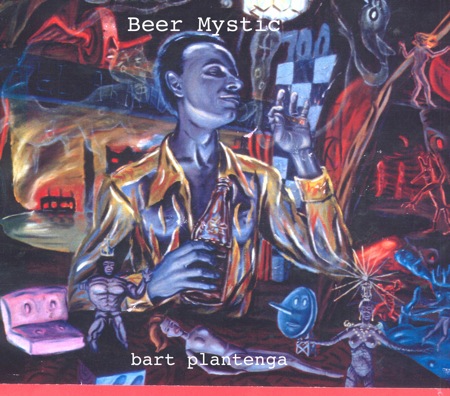
Interview with Bart Plantenga, Author of BEER MYSTIC


This month, author, international DJ, small press veteran, and ex-New Yorker Bart Plantenga launched a "simultaneously serialized" novel on 44 websites (including this blog) located across cyberspace and across the world. Perhaps more exciting than the new media format is the news that Beer Mystic: A Novel of Inebriation & Light (set in a gritty, downtown, late-80s New York) contains absolutely engaging storytelling. A founding member of the New York writers' collective, The Unbearables, Bart graciously agreed to answer some questions about the novel, being a writer in the age of internet publishing, and what it means anymore to be "underground."

*****

Karen: Tell us a little about the formation of the Unbearables.


Bart Plantenga: The short tale is a bunch of writers already disgruntled with the state of publishing in the 1980s started to form a black humorist scrum and armed only with our wits and wit we began to not take it any more. We could groan and drink with the best of them. Despite other accounts, the group was formed by Mike Golden, Ron Kolm and myself. We used to meet at Tin Pan Alley, a legendary bar run by a lesbian socialist with beautiful but tough barmaids and a jukebox that included the Butthole Surfers and Mack the Knife sung by Bertolt Brecht himself. Here we would just hang around with no agenda other than to exchange writer’s war stories, complaints, near seductions, observations, suggestions for improvement of the deaf, dumb and blind world of editors and publishers.

The group expanded quickly; within weeks, British poet and scallywag Max Blagg, [tattoo] artist-DJ Matty Jankowski and Hakim Bey, president for life of the Temporary Autonomous Zone, had joined. Purpose totally evaded us – was it our way of avoiding the Spectacle, the value of being useful or were we just lazy? – or maybe we transcended purpose. It was only as the group reached a critical mass of a dozen in the later 1980s that we combined drunken kvetching with doing. We did produce one reading at TPA that went really well considering we were playing in the middle of Times Square in the shadow of Broadway theatres, strip clubs, and other distractive venues. With gaping hole in the ceiling and the drip of rain water in a bowl keeping time, the Bass Boys [Al Margolis of Pogus and Dave Mandl of the Coolies] had offered to serenade me with jazzy upright bass a la Kerouac atmos but showed up with 2 suitcases of toy instruments and noisemakers instead as I read and stumbled through the earliest ur-Beer Mystic tales ...

K: Did you write Beer Mystic knowing that it would appear in serialized form? What led to the decision to serialize it all at once instead of making us wait for intervals in between?

BP: BEER MYSTIC [original title: Confessions of a Beer Mystic] was conceived as a series of humorous-inebriated kernels of poetic approximate truths vaguely in the style of Baudelaire’s PARIS SPLEEN via Lord Buckley or someone like that. But this quickly went awry as a combination of factors – long-windedness, my love of frivolous detail [Kerouac said something like “detail is the essence”] and a many-splintered love life – wedged their way into the initial haiku-ish-ness. So, yes, it was serialized in the beginning but that quickly went nowhere making my admiration for Dostoyevsky all the greater – he wrote Crime and Punishment in serialized form. Each week another chapter, which meant he had to have internalized the entire book in his head from the start to keep it all straight...

I decided to serialize it online out of frustration with the straight world of publishing – a frustration that seemed frighteningly similar to the one felt back in the Tin Pan Alley days. Think of it as the guy who has just struck it rich, no one believes he actually has. So he shows up in the Klondike Tavern with a few leather pouches that he bangs on the table. Everyone grows quiet as he opens the pouches and spreads the gold nuggets across the clammy table. That is what I’m attempting here. Or maybe I am buying a round for the whole bar in the hope that this will lead to something, strangers conversing, collaborating, a furious infection...

That it has been called many nice things by many people [tongue-in-cheekly “the greatest novel never published” by eds. Al Vitale & Joe Maynard] and that agent after agent quickly dispensed with it, as if they were handling a soiled diaper, while editors simply never bothered to respond – did they reuse the return postage for their own personal use? Nah! I have absorbed my share of rejection, enough for a lifetime with this book alone. Making me a sort of humbler hardass. I used to keep a scorecard of all the rejections by magazines, editors, and agents ... But that’s all just tears in my beer now.

That is not to say that it did not see the light of day: before this delusional gesture of global grandeur it had been published in many esteemed mags like Frank [Paris], Vokno [Prague], Smoke Signals, Urban Graffiti as well as anthologies like Semiotext[e] SF, Up Is Up But So Is Down... Which, of course, is like snuggly, furry pets licking your wounds. It helps.

So, yes, it was out of frustration – and curiosity. I wanted to know what you could do with new and less-new internet resources and media. And the BEER MYSTIC strategy was to take it around the world city by city, URL by URL based on a blend of personal criteria: personal connection, admiration for the site, exotic place that would help string it around the world... And then have it neatly wind up at some wonderful editor’s doorstep, its esteem and preceding it down a red carpeted hallway. But let me just say that I NEVER in 6 million beer years ever thought it would take so much effort over so much time [1.5 years] to get this thing rolling.

K: Have you made sense of the latest publishing revolution yet? Do you think authors need to stay up to the minute with “the biz,” or do we just need to grasp enough to make something work for us?

BP: I have made some sense of it. It has its good and its bad. The good is the pantheistic reach and access. That is also its Achilles heel probably. New media is only effective for as long as it takes before everyone else is using it.

The edge is somewhat gained from its exclusivity not its massive democratic dissemination. So Twitter has maybe already reached its apex as far as effective media. Unless it begins to add new apps I guess. But think of it like this: you discover a great bar an interesting, fascinating and influential clientele – people just like you – and you love going to it, to hang, discuss, harangue, make deals. Then Time Out and The New Yorker discover it and suddenly the place is overrun by tourists taking photos and fashionistas who want to be seen with people who may or may not be TV stars where and suddenly the place gets too crowded, too loud and annoying and so you move on. This happened to Soho, to Greenwich Village, the East Village, Williamsburg, to the Cedar Tavern, to Email, to many online forums and lists...

But I do like the hypertext aspect of it: getting Facebook to communicate with Twitter and Word Press to interact with Weebly and LinkedIn is like a voyage through your brain. But ultimately these channels are all based as much on hope as on strategic interconnectivity. You hope that liking someone or some group will earn the favor in return. You follow someone and they will follow you, although, thus far, I see that most Tweeters are following a lot more people than are following them.

Many of these social media remind me of the boom in fashion restaurants in the 1980s and through to the present – places you read about, saw featured on TV and you go there not to eat the food – which is all prop and besides the point – but to be seen spending money and to see whose presence you are in. The contact high comes from this perceptual proximity to celebrities or at least people behaving like celebrities. And today, we can even quantify that in hard numbers.

But, don’t get me wrong, I’m not a naysayer, I like many aspects of Facebook, for instance. Anyway, the fascinating still outweighs the frustrating. I see it as positive: you pepper the audience with scattershot FB images of yourself hoping that one out of a thousand will recognize you or connect with you.

K: Is Beer Mystic an e-book? Do you think that a story can BE an “e-book,” like, existentially?

BP: My second novel OCEAN GROOVE, OCEAN GRAVE uses the early version of hypertext [footnotes] as an alternative, parallel text. The notion of online novels is not bad in the sense of embedded links and rhyzomic straying from the strict well-worn path of the novel. E-readers seem fine to me and the idea of carrying a bunch of books on a piece of plastic seems great and if there are good search functions it might be better for the way I read - thumbing, scanning, pausing, going back, looking up references, footnotes leading me astray and eventually coming back to the main thread. If the backlighting makes it easier to read then I am all for it. My daughter is dyslexic – and through her behavior I discovered that maybe I am too – and I see the e-book as positive for people like us. She has trouble with italics, with lines and cramped leading and line spacing and loopy fonts so if text can be adjusted to meet these kinds of needs I see them as good alternatives especially since the old-fashioned book industry, with its bloated structure has meant books have become incredibly expensive. If e-books are ultimately cheaper then why not. I mean, books will not disappear – the intimate relation we have nurtured with them [curling up with a book] is a Darwinian adaptation that will not quickly be erased from our DNA. The jet plane did not lead to the extinction of the bicycle.

But, ultimately, reading is enhanced by hypertextuality. And yet, it can also be a pain, to be so easily distracted and led astray. There is something to be said for going to a park, just you and a book, no smartphone, no wifi – luxury or satisfaction or success will probably eventually be measured in how easily we can unplug our connectivity, how we regain our identity or sanity even through inaccessibility.

K: What do you make of today’s “webmag” small press environment? (Besides a serialized novel….) Do you think there are interesting differences between online mags and the little magazines, small press journals, or zines of yesteryear? What were your favorite literary periodicals in the New York 80s?

BP: I am a veteran and fan of zines [see Nice #4] but they – like cassette culture, like punk, like all DIY culture – have this inherent David vs Goliath heroic quality to them, which probably bloats their myth far beyond their actual reach. Producing them was great, reading them was challenging fun, selling them was, however, an incredible investment in frustration and disillusionment – capitalism sucks especially if you are the last fish in the food chain. Now that the notion of selling zines has all but disappeared there has been a renaissance in zines. Although, to save their sanity in a world of rampant democratization where everyone is a writer and no one a reader, editors have had to take undemocratic, elitist-like measures to stem the overwhelming tide of submissions. I can sympathize although it's irritating when you yourself are a submitting writer.

I think that the zines of yore had a clan-ish feel to them, like you could be part of an emerging subculture, which is, of course, a kind of [necessary] elitism, making it all the more titillating. Everything is now grand, cross-border and international – many ezines don’t give any indication of where they are located geographically, for instance. I still like the geographical aspect. This was important when I was choosing hosts for the BEER MYSTIC pub crawl. I wanted to know where they were. I think by becoming everything to everyone in an effort to be international you are at once everywhere and nowhere. The best is a local zine with roots, which is also open to the international.

Yikes! My favorite zines from the 80s-90s are zines that were often very personal and yet magnanimously open to strange and exotic work from outside their comfort zone. I name only a few that I remember because I was in some way connected to them: Fuck You: A Magazine of the Arts [and all other Tuli Kupferberg & Ed Sanders productions], Ins & Outs [Amsterdam], Smoke Signals, Not Guilty, Beet, Rant, Massacre [London], Exquisite Corpse, LCD, Murtaugh, but also small presses like Low Tech, Little Caesar, Tomboctou, and especially Top Stories, which published mostly short fiction booklets by women, which I only realized after submitting stuff to them more than once... But I could name a hundred others.

K: You now reside in your native Amsterdam, after many years in New York. What’s it like for you to write about New York from afar? Is a writer in self-imposed exile full of a certain clarity? Does the setting of “New York 1987” create a specific inspiration for you?

BP: I have a gestation period of 10 or 15 years anyway. I need this so that the distractions of a very loud and imposing reality don’t get in the way of creativity. I wrote the earliest remnants of BEER MYSTIC on the spot but it took a good 10 to 15 years before the stuff worked its way through the synaptical guts of my brain to become something like a finished book. I just recently had the urge to start writing about my years in Michigan – college, factories, cab driver – while my years in Paris are 75% documented in the unfinished novel Paris Sex Tete. Time allows memory to do its work. The 1987 setting is when the actual drunken dowsing of streetlights occurred. The year 1987 presages 2008 in that it hosted Black Monday in October, the day the stock markets collapsed as a result of some investors’ bubble popping. The result was that in no time hundreds of small and intrepid NY art galleries and such who catered to the trashing-it nouveau rich vanished. Probably not as dramatically tragic as what happened in late 2008 but, in some ways, a mirror-image specimen of today’s depression-like ambience. Thus it resonates as something beyond the period. The good thing back then was that the less monetarily endowed no doubt suffered but that was somewhat mitigated by the fact that the mighty often fell harder and further and so suddenly the loud bravado of raucous yuppies throwing fistfuls of dollars at waitresses, assuming everything and everyone was for sale met its pleasant denouement. That small satisfaction is altogether missing from the circumstances of the less-well-off in the current crisis.

K: What distinguishes your Mystical Beer from Bukowksi’s beer farts, Jean Rhys’ lonely drunks, Guy de Maupassant’s cafe absinthe, Hunter S. Thompson’s Puerto Rican rum, or Truman Capote’s late-morning martinis?

BP: The main difference is that Furman Pivo originally sees beer as an escape from disappointing reality, a workingman’s soma, which, if quaffed with enough style or attitude will begin to act like a lifestyle. This changes irrevocably to something more serious – both utilitarian and poetic – when beer and its modus operandi leads to an entirely new level of interdependence between self and beer. Mike Golden [ed. Smoke Signals] has astutely noted this in his preface to BEER MYSTIC: “Though all similarities between Furman Pivo and Carlos Castaneda's journeys end with the discovery you've been transported to the next level of mutant cognition by Pivo's ballsy, yet elegant, street-wise hops, if you're stoked to the gills when that realization hits home, it won't help you hold on to what's right in front of your nose without drinking liberally from the language on a regular basis.”

Convivial escape gains a higher purpose as a result of his communion with beer.

K: What does “the underground” mean now that so much artistic output is instantly available on the internet?

BP: Underground continues to reverberate, make things rumble and continues to be appropriated and then instantly dashes away to new warehouses, enclaves, codes, sounds, always just out of reach of the appropriators. You know when the New York Times has discovered something that it has already long ago vacated the premises. The New Yorker now writes so reverentially about the Black Mountain Poets, the Beats and Punk – with a safe buffer of myth-making time and commodification between them – because they have become museum fare, entered the canon, part of the Spectacle. These very movements were the target of hundreds of snooty cartoons and articles in their heyday – I saved a clipping inserted into my original paperback copy of On The Road, which summarized some the opinions of some of the bastions of proper culture at the time inc. The New Yorker, which back then described it as a “forlorn heap of images of America... [which] is simply unintelligible.” But, hell, straight culture eventually “gets” or at least learns to consume most “underground” culture.

That is partly why The Unbearables in the mid-1990s organized a sit-in at the New Yorker, to demand that they “free verse” from its snooty confines. That is why the Unbearables protested the commodification [ultimate legitimization] of the Beats, when Ginsberg and Co. lectured and performed at Town Hall in Times Square where for a regal sum you could witness the Beats perform for exorbitant prices. This, of course, led to the scathing Autonomedia-published anthology called Crimes of the Beats, which did not savage the Beats personally so much as their commodification. Maybe we were just fed up with being compared to them, with the Beats being the only literary group most people could name. Ultimately, the best of their work continues to resonate beyond any attempts to appropriate it. After all, it was the ultimate Beatnik, Gregory Corso himself who, during the Town Hall proceedings, ventured outside to join the Unbearable picket line and yell his own anti-commodification couplets.

*****

Find Beer Mystic on the web here. Recommended reading!

Monday, May 23, 2011

The Pop-up Small-Press Bookstore Trend Continues

First I was excited to visit the pop-up bookstore in the West Village, Ed's Martian Book (pictured above), which had the feel of an art installation dedicated to selling one title, Martian Summer (Pegasus Books) by Brooklyn author Andrew Kessler. Set to be open from April 12 to May 15th, the store had sold about 500 copies of the non-fiction book when I visited on May 1st.

Next I was excited to get back to Pittsburgh, where Fleeting Pages pop-up bookstore (above and below) opened May 7th, placing small press titles, zines, comics, and self-published books in a cavernous space recently vacated by Borders Books.


And now, I'm thrilled to learn that Veronica Liu, a writer, managing editor at Seven Stories Press, and publisher of Fractious Press, will be opening a one-week, pop-up, all-small press bookstore in the upper Manhattan neighborhood of Washington Heights, on Broadway at 161 Street. The bookshop will open June 14 through June 20 and will host events such as workshops, readings, and performances. Stay tuned for more details.

See more photos of Ed's Martian Book here.

See more Fleeting Pages photos here.

Friday, September 10, 2010

Howl! Festival in New York


In honor of the three-day, eighth annual Howl! Festival that starts today in New York, I've decided to repost two resources I made last December for finding out more about (or teaching) Howl via the library.

The first is a two-part video I made about the history of Ginsberg's groundbreaking poem, and about how to find books and other resources on Howl at the Carnegie Library of Pittsburgh:

See part one of the Howl video HERE.

Part two is HERE.

The second resource is a LibraryThing catalog I complied of 58 resources on Howl. Essentially an annotated bibliography, this catalog includes notes on the relevance of each resource to the poem and helpful aids like links to online resources (including some readings of the poem) or relevant page numbers for anthologies. LibraryThing itself is useful for always being one or two clicks away from Worldcat, Amazon, or reader suggestions.