Showing posts with label reading tour. Show all posts

Thursday, June 2, 2011

A New Kind of Book Blog

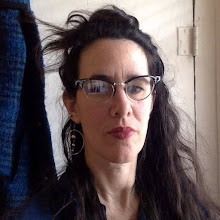
Juliet Cook reads with the TypewriterGirls Poetry Cabaret (downtown Pittsburgh), June 25, 2010

Continued thoughts from yesterday's post on small press reading series: What if a city's lit scene hosted a book blog specifically dedicated to reviewing the books of authors coming into town for upcoming readings?

Let me back up. There's two factors that lead me to this idea:

1.) Yesterday I wrote some do's and don'ts of running (or participating in) a reading. I talked about some things that reading series hosts can do to maximize the positive experience of visiting writers (see #2 on this list). Since we can try our best to cultivate a growing audience for our reading series, but can't ultimately control how many people show up or what event is competing with the reading that particular night, I talked about other things we can do to ensure that the out-of-town author gets to meet other cool writers, or gets publicity or feedback for their new book. I mean, you don't want there to be an unusually low turnout that night and then have a dud audience be the visiting writer's entire memory of both your city and your reading series, right?

2.) I am currently engaged in booking readings and hustling reviews for an author I just published. I'm really excited about the book, but it's the poet's debut collection and no one's heard of him. Every pitch I make is an uphill battle, a competition for someone's time, a bookstore's shelf space, a reading series' slots, and the dwindling column inches dedicated to newspapers' book reviews. After booking the author a reading in Baltimore, I wrote to one colleague in that city to ask for suggestions of local reviewers and book bloggers. He wrote me back with a list of people to try, but gave a familiar warning: Most book reviewers are backed up on such requests.

We've all been reading, of course, about book review sections getting cut or drastically reduced from newspapers and magazines. But even with all the talk about print books turning into e-books, and bookstores large and small having serious struggles, the fact remains that more titles are being published each year. So the demand for book reviews should being rising, not diminishing.

So, I'm proposing the following in my current city of Pittsburgh, and suggesting that other cities consider such a model:
A book blog that would be dedicated to publicizing upcoming readings, especially to reviewing the new books by out-of-town authors slated to read in Pittsburgh soon. So that no one person would be taxed for time, I would be interested in setting up such a blog only after I gathered a critical mass of volunteers. Say, 15 or 20 people whom I thought were solid reviewers, who could be called on to review the next writer, with a rotation insuring that no one had to write a review too often. These reviews would be unpaid, which is too bad. Traditionally, newspapers and magazines have paid for book reviews, and I hate to replace a paid writing gig with an unpaid one. Frankly, I think the amount of unpaid work that goes into the small press is a bit shameful. Sure, we love what we do, but it does take enormous amounts of time and labor, and meanwhile, the rent marches on. If anyone has a suggestion of how to generate a fund to pay reviewers even a token amount, please use the comment section.

Further, the reviews would be positive. The idea would be to generate an audience for writers coming to town, so the reviewers should answer the question (among others): Who would like this book? Who is the intended audience for this book? If the reviewer didn't like the assigned book, s/he would have the option to interview the writer instead, or to not review the book. I wouldn't advocate lying or turning into a sycophant just for the blog, but rather trying to generate an audience and letting the audience decide for themselves what they thought of the writer. (Some writers, of course, give a great show but read very differently on the page.)

When time allowed, interviews could run in addition to reviews. Authors would be asked for JPEGs of their book covers and author photos.

Would local authors be reviewed or interviewed? Maybe. I don't mean to prioritize out-of-town authors over Pittsburgh writers, but I would want to avoid reviewers hyping their friends, over-taxing the volunteer reviewers, constant requests from local writers, and the inevitable scenario of disappointing people often. It might be best to just leave out all those scenarios by confining the blog to reviewing writers coming from outside of Pittsburgh. Or, perhaps a compromise could be running interviews with local writers, with questions asked by other local writers.

I think that interaction and dialogue between writers from different cities is crucial to the health of any one city's literary scene: Scenes that get too provincial, without new blood or fresh air, are in danger of becoming stagnant. A blog like this could add to such a dialogue. Maybe in a perfect scenario, Pittsburgh writers could be reviewed or interviewed by out-of-town writers instead of local-on-local. But that aspect would involve a significant addition of work and organization, so it might be better to start with a more simple formula.

What do you think?

Wednesday, June 1, 2011

Some Thoughts on Small Press Readings

Michelle Tea reads at the Mattress Factory (Pittsburgh) with Sister Spit, April 23, 2010

1. When organizing a reading of out-of-town emerging writers, put one or two well-liked local writers in the lineup.

I learned this one when I organized my own cross-country reading tour a decade ago, with me, me, me-only on every bill. Friends in each city came out, but unless the venue itself hyped the reading, very few strangers showed up. I’ve seen this more recently from both the organizer side and the audience side—advertising a little-known name doesn’t go half as far as people coming out to see a familiar face or support a friend.

2. If you want to be supportive to those out-of-town writers, there’s various ways you can make them feel welcome and want to return to your city and your reading series.

An audience is the best thing you can offer, but there’s other ways to say “thanks” to that author who traveled on his or her own dime to get to your reading series.

*Is it possible to get a review for their book in your city, in advance of the reading? Can you hook them up with the local newspapers, and/or local book bloggers? At the very least you can have them send around some publicity materials (such as author JPEGs, links to reviews & the book’s webpage), to try to get a blurb or recommended event listing.
*Take them to a good (and affordable) restaurant and give them good chat before the reading
*Take them to a great bar and give them good chat after the reading
*Introduce them to local authors (at dinner, at the reading, at the bar)
*Buy their book
*Take photos during the reading
*Record the reading on audio
*Blog about, photo-blog, or post audio of the reading afterwards (for audio, get the writer's permission)
*Post the photos to Flickr (especially if they came out well) and include the author’s name
*Post photos to Facebook and tag the author


3. If you’re invited to be in a group reading in your own city, don’t slack on inviting your friends and fans.

This is one way a reading gets low turnout—each reader expects that a readymade crowd will be there waiting for them. How? Based on the other readers notifying THEIR friends and fan base. I think that some writers get worried about “annoying their friends” by constant self promotion. But often enough, your friends actually want to see you read, and your false modesty isn’t helping you or anyone else. In fact, if you’re in a group reading, some of your friends might come because they see that you AND another person they’ve been wanting to hear are reading together. But how will they know if you don’t tell them? (Don’t forget to list the other readers on the bill.) The reading organizer is counting on you to help get the word out. You don’t have to send out 15 email announcements, but send out at least one or two. Keep fliers on your person for when you run into people who’d want to know about your reading, and make the announcement at one reading about your next reading. Put in the labor and they will come.

4. For group readings, don’t take up more time than the organizer requests. Especially, don’t take up a LOT more time that the organizer requests.

It’s a bad karma move against your fellow authors on the bill, and when you wake up from your ego-stupor, you’ll realize that the audience didn’t want to listen to you for 24 minutes, either. They came for a group reading, and the best way to keep the event entertaining is to keep things moving at a good pace. If you’ve been asked to read for seven minutes, don’t rebel--just make it the best seven minutes the audience has ever heard. In other words, dare to be remembered for your writing and not how much time you commandeered.

5. Speaking of group readings, do they really need to be more than four or five people?

This one is certainly up for debate, and there are definitely circumstances that might warrant long lists of readers (AWP, or sometimes a book release party). But generally, those readings where I’m expected to sit in a chair and listen to 11 or 13 readers in a row make me feel like I’m being held hostage. Judging from the number of people who leave at intermission or after their friend reads, I don’t think I’m the only one. My vote is that excessive writer lineups are usually a nasty situation to subject the last two readers to, not to mention the audience. Among other things, it makes for bad mingling because everyone’s darting away under cloak of dimmed lights to avoid looking like the jerk who left early.

6. When asking out-of-town writers to a group reading, consider (and communicate) how much time you’ll give them to read.

Would YOU want to travel far in order to read for seven minutes? Probably 15 minutes is about the minimum you should ask out-of-towners to read. Again, certain circumstances like writing conferences or festivals may be an exception.

7. Speaking of out-of-town writers, take a moment to de-mystify your city for them.

Is there an affordable hotel you recommend, is there an area you recommend avoiding, is your city a new stop on the Megabus line? Is there a must-see attraction or a great bookstore in your area? Can you send them a link to a local restaurant blog, is there a regional driving idiosyncrasy they should know about? Etc.

8. So you’re running a reading series: How do you get, grow, and keep an audience?


These things can be a bit of a mystery, whether you’re a performer, an author, a reading series: who succeeds and who stagnates, or who explodes like a supernova and then fades quickly? I can’t pretend to have the secret formula, but here’re some thoughts.

*First ingredient: Good readers. Even something this obvious is tricky, because some series with “open door” policies can attract a really interesting mix of readers and performers inbetween duds, and in those cases, you don’t want to over-curate the lineup. But otherwise, I advocate a healthy degree of quality control so the audience you do get believes that every reading they attend will have something they want—even if they haven’t heard of the writers.

*Think of it as creating a community. Who is your series attracting and why do they keep coming back? Do they like certain publishing houses or sub-genres more than others? Do they appreciate a wide variety of writers or do they want all poetry, or strictly fiction? Are you offering a type of “scene” they want to be involved in that they can’t get anywhere else? Is your audience an extended group of your friends who come for the free beer you secured from that brewery sponsor? Are they foodies who come for the amazing pot luck? Do they come for the hip, unique, or well-known venue you’ve chosen, or the monthly music act that follows the readings?

*Advertise widely. Don’t rely on ONE method to notify your audience—just telling your friends, or just making a Facebook event page. Give people from different walks of life and different areas of your city a chance to discover you (to me, this is part of what the small press is about, at its best). Fliers at coffee shops, bookstores, and college English Departments; announcements on radio stations; asking your friends to forward emails to their friends; listings in the weekly paper and any relevant blogs; pushing for local book reviews; getting onto literary event lists; maintaining a good-looking blog or website for the reading series, etc.

*Get good at the technical side of the readings. Nothing kills the mood of a reading like long delays due to technical difficulties. If your reading requires a microphone and lighting, have someone on hand who knows how to adjust these should something mishap. Lighting should let your writers see what they’re reading, and hopefully flatter them, too.

*Offer consistency. The quality of the readers, the “extras” your audience comes to expect (whether food, music, low cover charge, etc), the reliability of the readings (EVERY month, not taking random months off), the general size and tone of the readings—nothing has to be set in stone, but when what you’re offering is virtually unknown writers, there needs to be something consistent for your audience to return to, and for.

Any experienced readers, reading series hosts, or audience members, feel free to comment with your own thoughts and observations.